
Jinli Ancient Street (锦里古街)
A rebuilt Qing-style folk street next to the Wuhou Shrine: red lanterns, snack stalls, tea houses and craft shops. It's touristy by nature, but it's a fun, free, low-effort evening — and the food is the real draw. Think of it as the easy, atmospheric intro to Sichuan street life before you graduate to the quieter alleys.
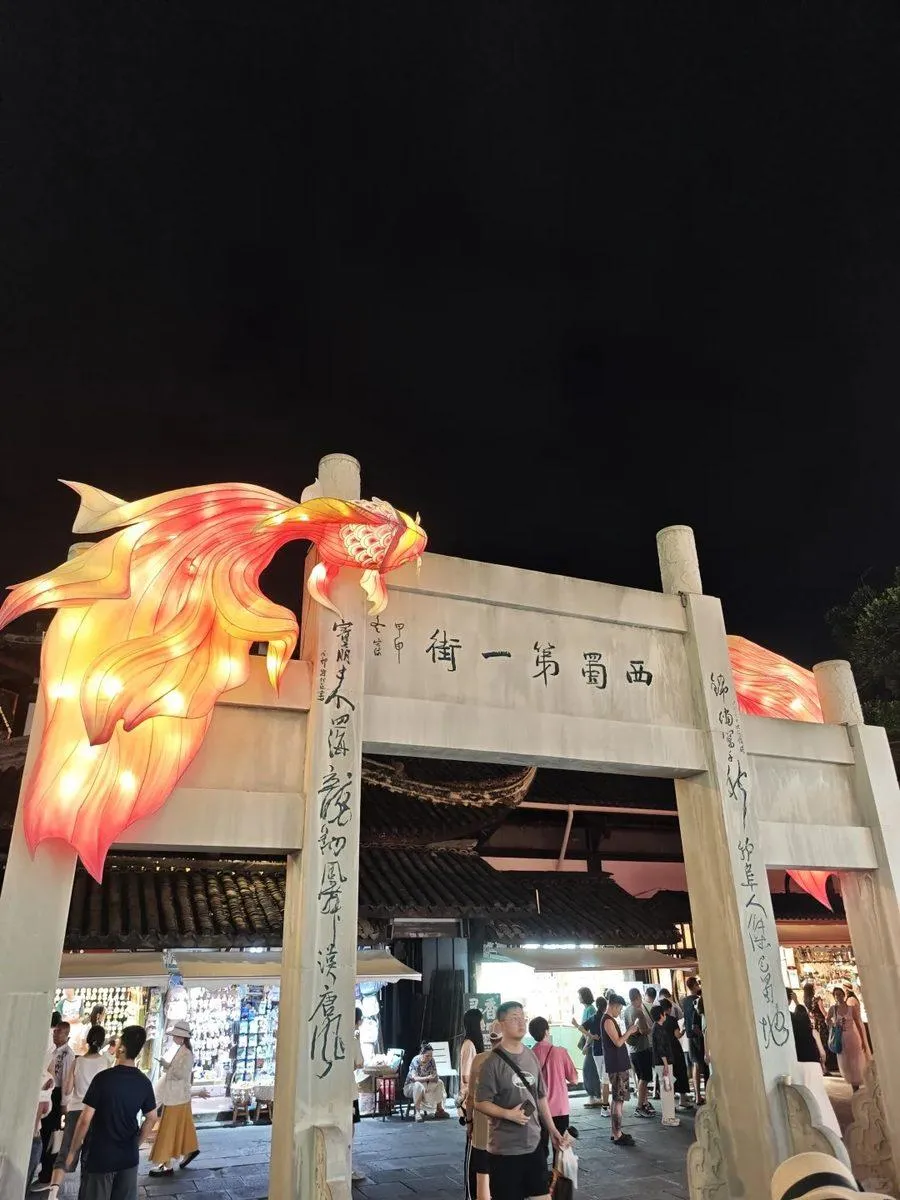
What this street is for
Jinli is best as an evening food-and-people-watching stop, not proof of an untouched historic quarter. Its value is convenience: a short, lantern-lit walk after Wuhou Shrine, with familiar Sichuan snacks in one place.
Make one or two intentional food choices. Compare stall portions and prices before ordering, then leave room for a proper meal or tea nearby. A long queue is not by itself a quality signal.
Use it as a connector. Enter after Wuhou Shrine, walk the full lane once, then decide whether to continue toward a quieter teahouse or return to central Chengdu.
Before you go
- Location: next to the Wuhou Shrine (武侯祠), west-central Chengdu. Metro Line 3/5 to Gaoshengqiao (高升桥) then a short walk, or Line 10 to Wuhou Shrine Station (武侯祠站) almost at the gate.
- Entry: the public street is normally free, while individual shops keep their own hours. Visit around dusk if you want the lantern atmosphere, but do not plan around a fixed lighting or closing time.
- Best time: evening — lanterns lit is the best version of the street. Come hungry.
- Time needed: 1–2 hours for a stroll, snack crawl and photos.
Inside — what to actually do
- Eat your way down: three-cannon rice cakes (三大炮), sugar-oil fruit (糖油果子), bobo chicken (钵钵鸡), long wontons (龙抄手), skewers and bubble tea — the greatest hits of Chengdu snacks in one strip.
- Tea house: sit for a gaiwan tea and watch the street theatre of people; the riverside tea spots are the calmest.
- Craft lanes: the side alleys have paper-cutting, sugar painting and Shu embroidery demos — fun to watch even if you don't buy.
- Wuhou Shrine back gate: the shrine's rear exit drops you straight into Jinli — do both in one visit.
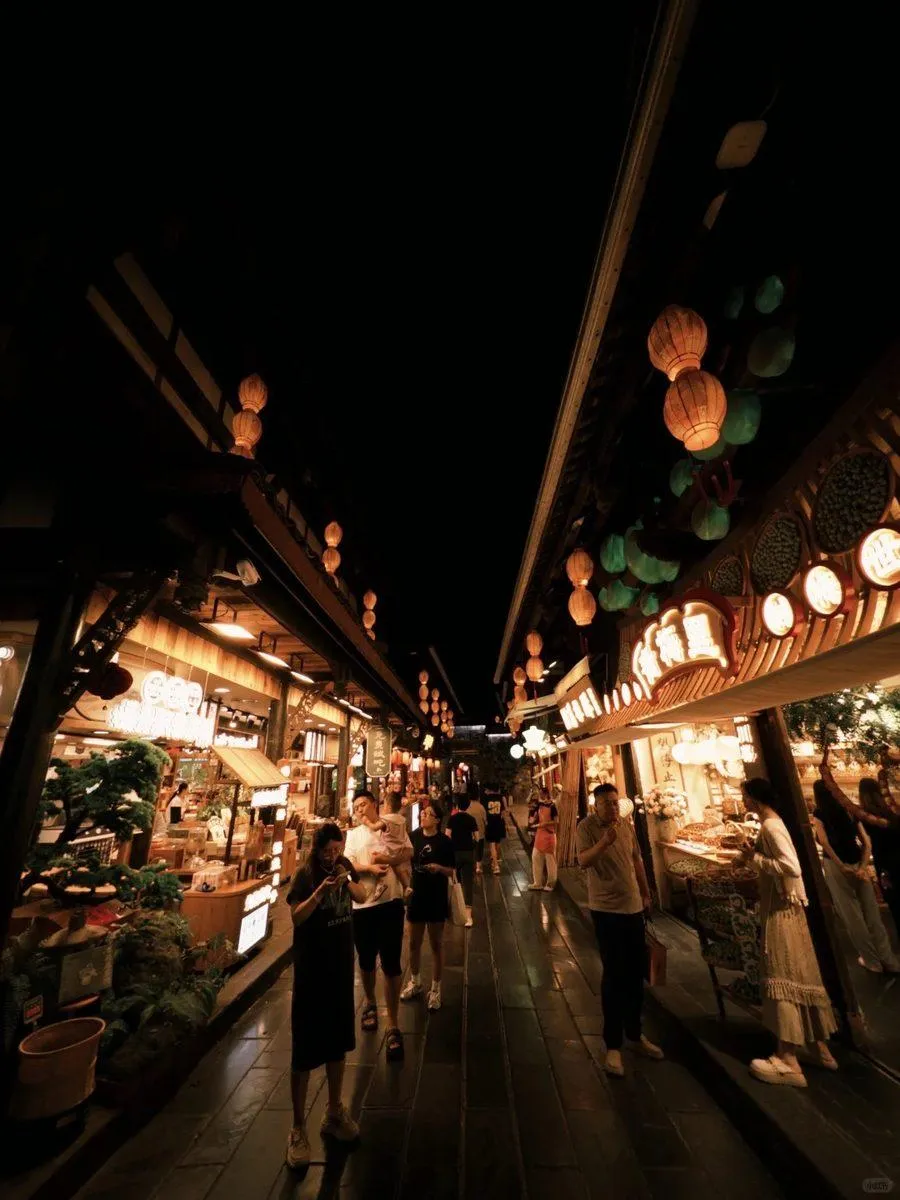
After you leave
- Hotpot dinner: a natural next step — Chengdu's signature, best shared. Plenty of hotpot houses within a DiDi ride.
- Wider evening: pair with a stroll of the Wuhou Shrine red wall (lit on the Friday/Saturday night tour) or head back toward Kuanzhai for a second old-street contrast.
Before you arrive — quick setup
- Arrive at dusk so you catch both daylight and lantern-time in one walk.
- Link Alipay/WeChat to a Visa/Mastercard before you go — most stalls won't take foreign cash happily.
- Go with Wuhou Shrine — shrine in the calm morning, Jinli for lanterns and snacks at night.
How to get there
- Metro: Line 3/5 to Gaoshengqiao (高升桥) Exit D, 8-min walk; or Line 10 to Wuhou Shrine Station (武侯祠站) Exit B, nearly at the gate.
- Bus: 1 / 57 / 82 / 334 stop nearby; the city sightseeing shuttle stops at the shrine.
- DiDi / taxi: set "锦里古街 (Jinli Ancient Street)"; ~20–30 min from central Chengdu.
- On foot: if you're at Wuhou Shrine, the Jinli entrance is a 2-minute walk from the back gate.
How long to spend
- Minimum: 45–60 min — a quick walk, one snack, a lantern photo.
- Recommended: 1.5–2 hours — a slow snack crawl, a tea-house sit-down, photos in the lit lanes.
- Best window: arrive ~17:00, watch the lanterns come on around 18:30–19:00, leave by 21:00 before the crowds thin and stalls close.
Things to watch out for
- It's a tourist street — prices reflect it. The main drag's snacks and "tea ceremonies" are marked up; walk into the side alleys and back lanes for cheaper, better local eats.
- Bag watch. It gets shoulder-to-shoulder at peak evening; keep your phone and wallet front-pocketed.
- Street "free tea" invites and clipboard surveys are soft-selling traps — a polite no and keep walking.
- Bargain on crafts. The embroidery and trinkets are negotiable; the food has fixed prices.
- Cash is awkward. Stalls prefer phone pay; a linked Alipay/WeChat saves friction.
- Go early or late in the day if you want photos without a hundred strangers in frame — mid-evening is the busiest.
Popular vs. niche
What everyone does:
- The main lantern drag — the postcard shot of red lanterns over the wooden street.
- The headline snacks — three-cannon rice cakes, sugar-oil fruit, bobo chicken — from the busiest stalls.
- A group tea-house photo op on the central bridge.
What locals quietly love:
- The back lanes (off the main strip) — quieter, cheaper food, and the real craft demos without the crowd.
- Early morning — before the stalls open, the empty wooden street and mist on the tiles are genuinely atmospheric and photo-clean.
- The riverside tea seats at the far end — the calmest corner, where Chengdu locals actually sit and chat.
- Pair with the Wuhou Shrine night tour (Fri/Sat 19:00) — the lit red wall next door is the better photo, and the combo beats either alone.
- Compare with Kuanzhai — Jinli is the lively tourist version; Kuanzhai mixes old courtyards with cooler cafés if you want the calmer take.
One afternoon, two moods: do Wuhou Shrine in the calm morning (under 2 hours), exit the back gate into Jinli around 17:00, snack your way to the lantern lighting, then a hotpot dinner nearby. You get the solemn history and the easy evening fun with zero backtracking.
Nearby
After Jinli, a hotpot dinner is the natural next step — Chengdu's signature, and best shared. Or loop back via Kuanzhai Alley for a second, calmer old-street wander.