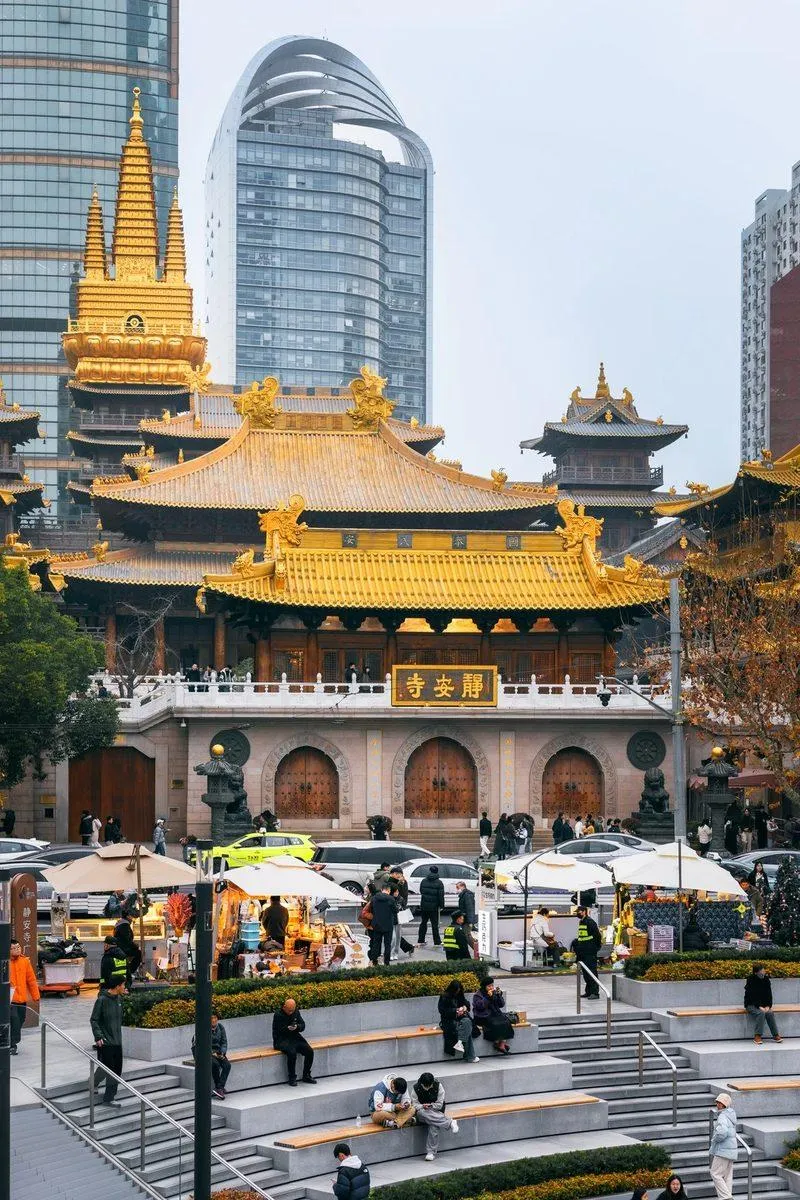
Jing'an Temple
Jing'an Temple is Shanghai's sharpest old-and-new contrast: golden Buddhist halls, incense smoke and a major metro interchange surrounded by malls and towers. It is an active religious site, so visit as a guest first and a photographer second.
First-time visitor essentials — the four worries solved
Passport: a normal temple visit usually does not require passport-linked reservation. Carry a secure copy and follow any holiday crowd-control notice.
Payment: admission is commonly around ¥50, but festival days and policies change. Alipay/WeChat Pay is easiest; keep small cash for the staffed window or offerings.
Internet: save “静安寺” in Amap. English interpretation is limited, so download a short Buddhist-temple etiquette note before arriving.
Hotels: Jing'an is one of Shanghai's easiest foreign-visitor bases: direct Line 2 access, strong dining and plenty of hotels experienced with passport registration.
How to visit respectfully
- Arrive early. Use Jing'an Temple station and follow signs for the temple rather than emerging inside a distant mall.
- Buy the current admission ticket. Check the entrance notice for that day's opening and last-entry time.
- Enter quietly. Walk around ceremonies, do not pass directly in front of someone bowing, and keep phone calls outside.
- See the main halls and courtyard. Read the space slowly instead of chasing every photo angle.
- Finish outside. The view from the metro exits and surrounding streets shows the temple against modern Shanghai.
Opening, dress and photography
- Hours: temple hours can change for religious observances and holidays. Go in the morning and confirm the day's notice at the official entrance.
- Dress: ordinary travel clothes are fine, but cover shoulders and avoid very short or disruptive clothing in worship halls.
- Photography: courtyard photos are commonly possible; obey signs inside halls, keep flash off and never photograph worshippers at close range without permission.
- Incense: use only the permitted quantity and designated burner. Do not carry burning incense into halls.
- Offerings: donations are optional. Ignore anyone outside promising guaranteed luck, fortune-telling or a special private blessing for cash.
What to notice
- The layered golden roofs and how they are framed by surrounding high-rises.
- The central courtyard, incense burner and movement of worshippers between halls.
- Large Buddhist statues and decorative woodwork; labels may not explain everything in English.
- The change in sound from the traffic-heavy street to the temple interior.
Transport and combining the visit
- Metro: Lines 2, 7 and 14. Exit signs are clearer than street GPS around the interchange.
- Next stop: walk west or south into Jing'an's cafés and leafy streets, or continue by metro toward People's Square.
- Tianzifang: easy by metro but adds another crowded attraction; pair only if you want a full urban neighbourhood day.
- Rain: the temple is still visitable, but exposed stone stairs become slippery.
- Accessibility: ask staff for lift or step-free access; some halls and thresholds are not on the obvious route.
Foreign visitor cautions
- Do not treat monks or worshippers as photo props.
- Keep your bag zipped in the busy metro and entrance queue.
- Buy tickets only at the official entrance or authorised channel.
- If a ceremony is underway, stand back and follow staff instructions.
- Use a named mall or hotel as the DiDi pickup point; the intersection is too busy for vague pickups.
Before leaving the hotel
- Check the day's opening notice and any festival crowd control.
- Wear easy-to-remove hats and respectful clothing.
- Carry mobile payment plus small cash.
- Save “静安寺站” and your next destination in Chinese.
Official check before you go
Review current district information on the official Shanghai tourism Jing'an guide, then confirm same-day temple hours at the entrance.