
Xi'an Muslim Quarter Food Walk (回民街)
This is not five unrelated sights. It is one easy walk through Xi'an's old city: start at the Bell Tower, pass the Drum Tower, enter the Muslim Quarter through its famous main street, then finish among the more local food stops around Sajinqiao. The hand-drawn map above gives you the shape; this guide tells you what each stop is actually for.
Save these Chinese place names before leaving Wi-Fi for navigation: Bell Tower (西安钟楼), Drum Tower (西安鼓楼), Huimin Street / Beiyuanmen (回民街 / 北院门), Great Mosque (化觉巷清真大寺), and Sajinqiao (洒金桥). The Muslim Quarter is the wider neighbourhood; Huimin Street and Sajinqiao are different parts of it.
One route, five different experiences
Know the names before you go
| Name | What it really means | How to use it |
|---|---|---|
| Muslim Quarter (回民街) | The wider Hui Muslim neighbourhood north and west of the Drum Tower. | Think of it as the whole area, not a single street. |
| Huimin Street / Beiyuanmen (北院门) | The famous, dense pedestrian main street within the quarter. | Good for first impressions, snacks and atmosphere; expect crowds and tourist pricing. |
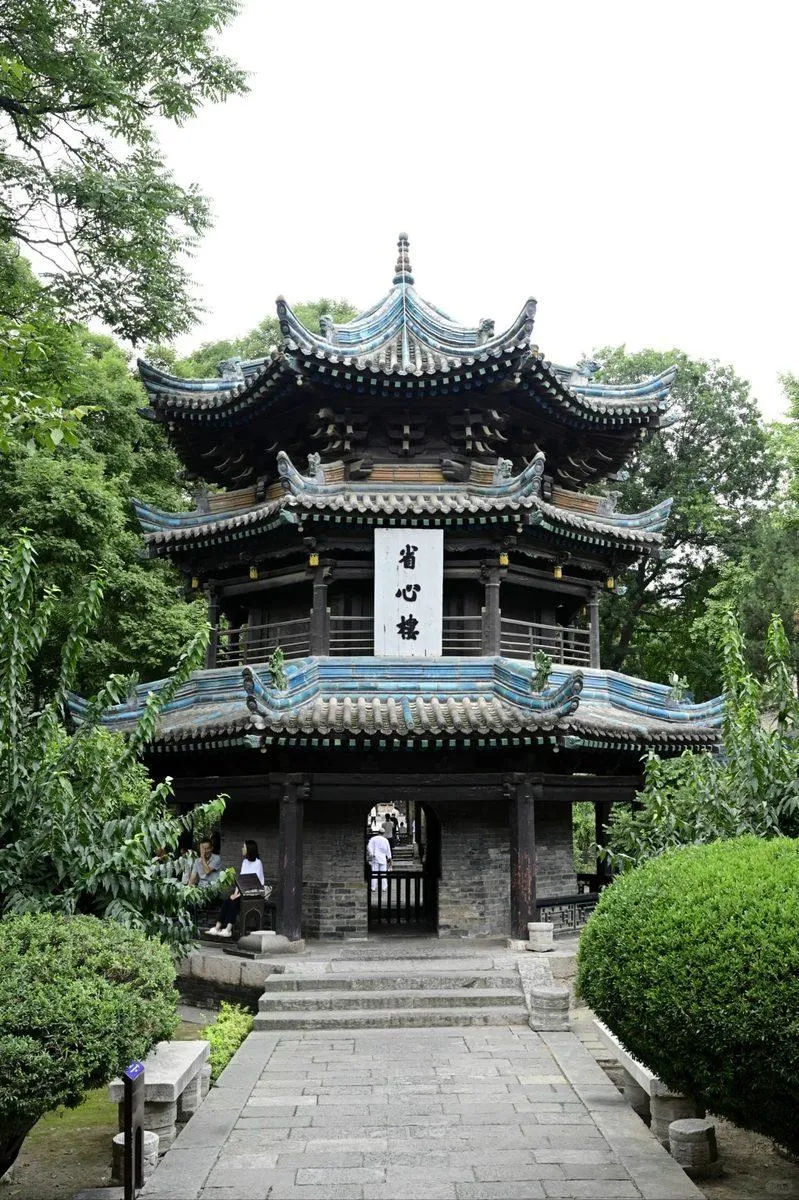
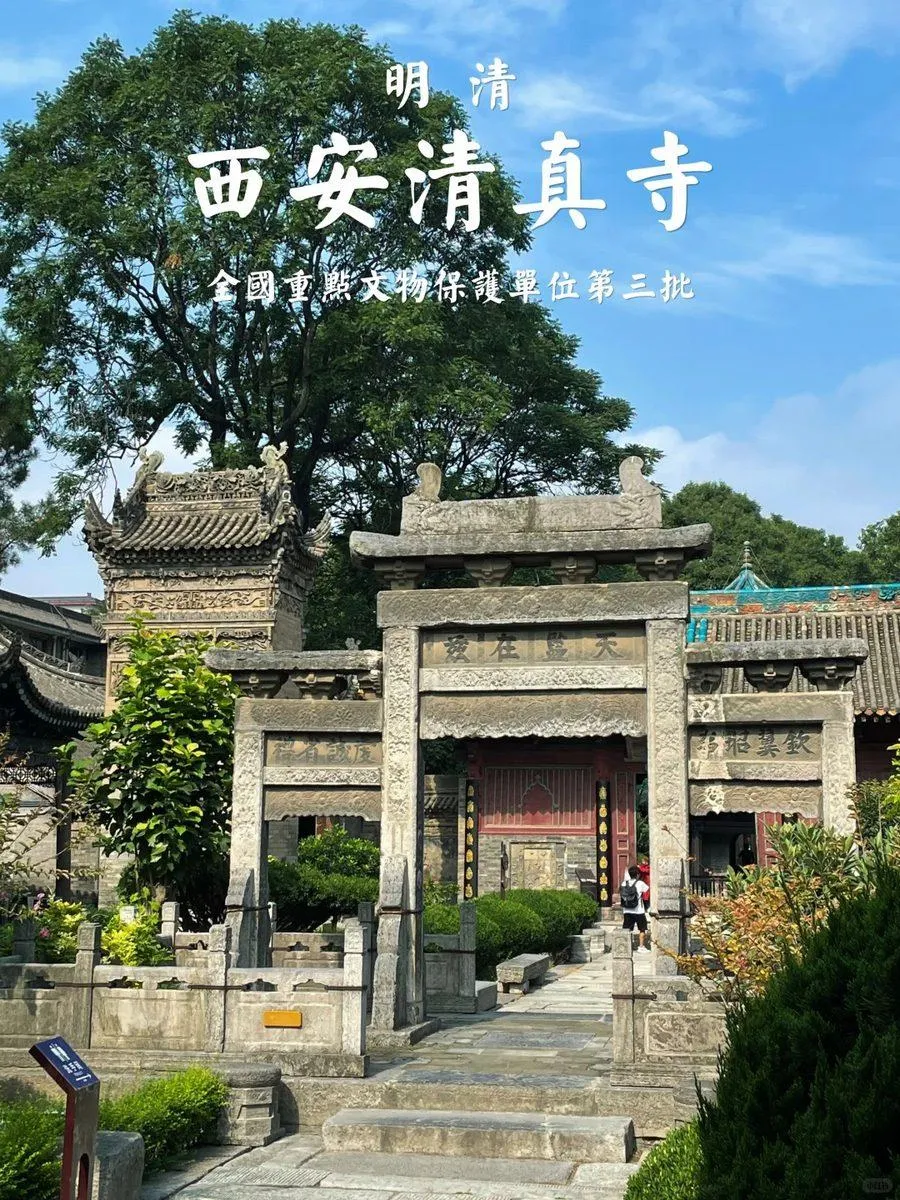
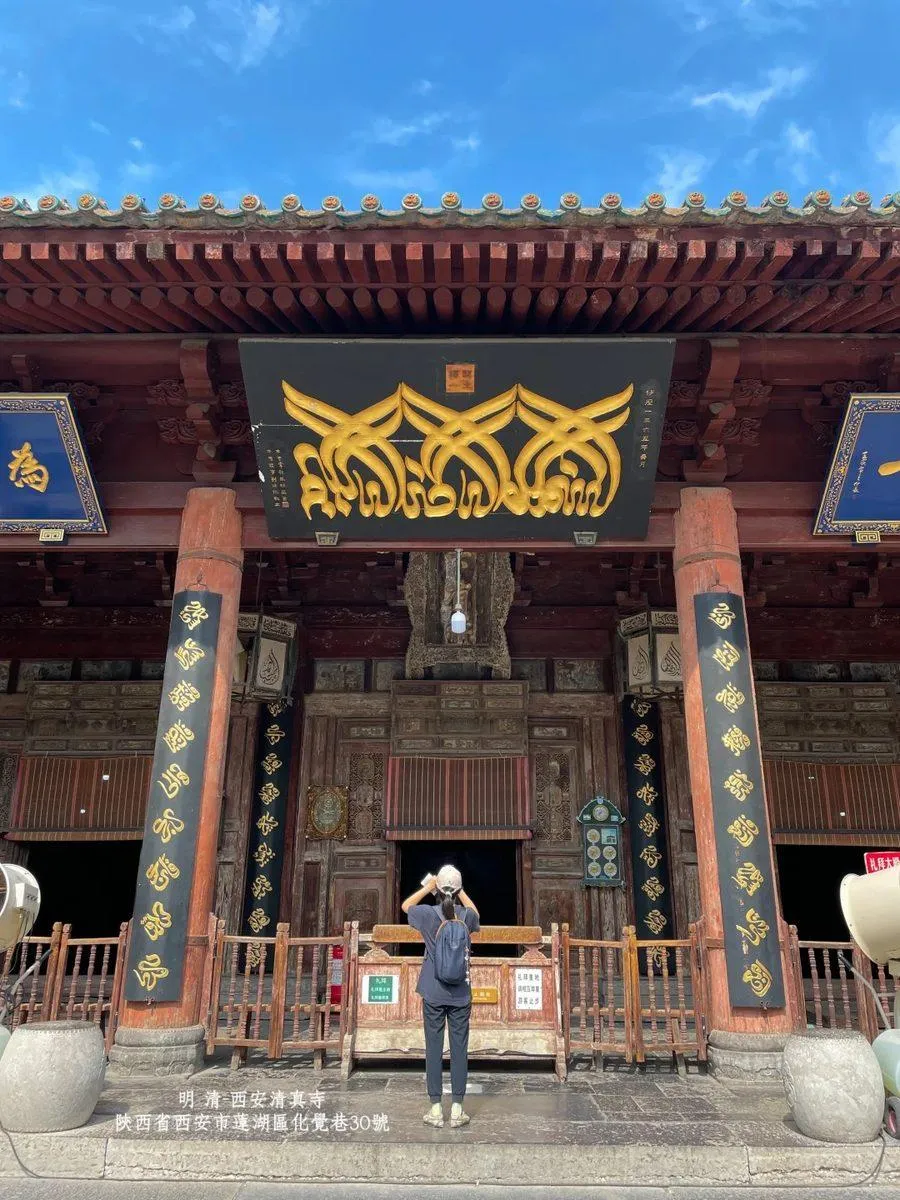
| Great Mosque (化觉巷清真大寺) | A historic mosque in a Chinese courtyard style, reached from a side lane. | Best in daytime if you want a calm cultural contrast to the food streets. |
| Sajinqiao (洒金桥) | A more everyday food street northwest of the main strip. | Use it as your food finish; English is less common, so save the name in Chinese for maps. |
Your first-timer route
- Meet at Bell Tower. Take Metro Lines 2 or 6 to Zhonglu Station (钟楼站), use the underground pedestrian access, and get your daytime or evening landmark photos first.
- Walk west to Drum Tower. It is the visual doorway to the quarter. Visit the tower if you want the architecture; otherwise use it as the easy landmark that keeps you oriented.
- Walk north through Huimin Street / Beiyuanmen. Treat this stretch as a tasting lane: share one or two small items, notice what looks busy, and do not fill up at the first stall.
- Choose the Great Mosque only in daytime. It is a respectful cultural visit, not a food stop. Dress modestly, follow the signs at the entrance, and do not treat prayer areas as a photo set.
- Finish at Sajinqiao. This is where to sit down for the meal you actually want: lamb paomo, roujiamo, noodles or skewers. Use translation for ingredients and spice level, then walk back or take the metro from nearby stations when you are done.
Bell & Drum Towers: begin with the city's compass
The Bell Tower and Drum Tower are best treated as one opening chapter, not two separate boxes to tick. Bell Tower is the simple place to meet, arrive by metro and understand the centre of the old city. From there, the Drum Tower is the visual threshold: once you pass it, the route changes from wide central streets to a dense, lived-in food neighbourhood. If you want to go inside both towers, allow 60–90 minutes; if you only want the walk, take your photos at Bell Tower and head west to the Drum Tower before your appetite arrives.
- Best use of time: arrive in late afternoon, when the landmarks are still easy to orient around and the food streets are starting to wake up.
- Do not get lost: save Bell Tower (钟楼) and Drum Tower (鼓楼) in your map before leaving the station. The underground pedestrian crossings are the easiest way to reach the buildings safely.
- Go deeper: use the separate Bell Tower guide or Drum Tower guide if you plan to buy tickets or go inside.
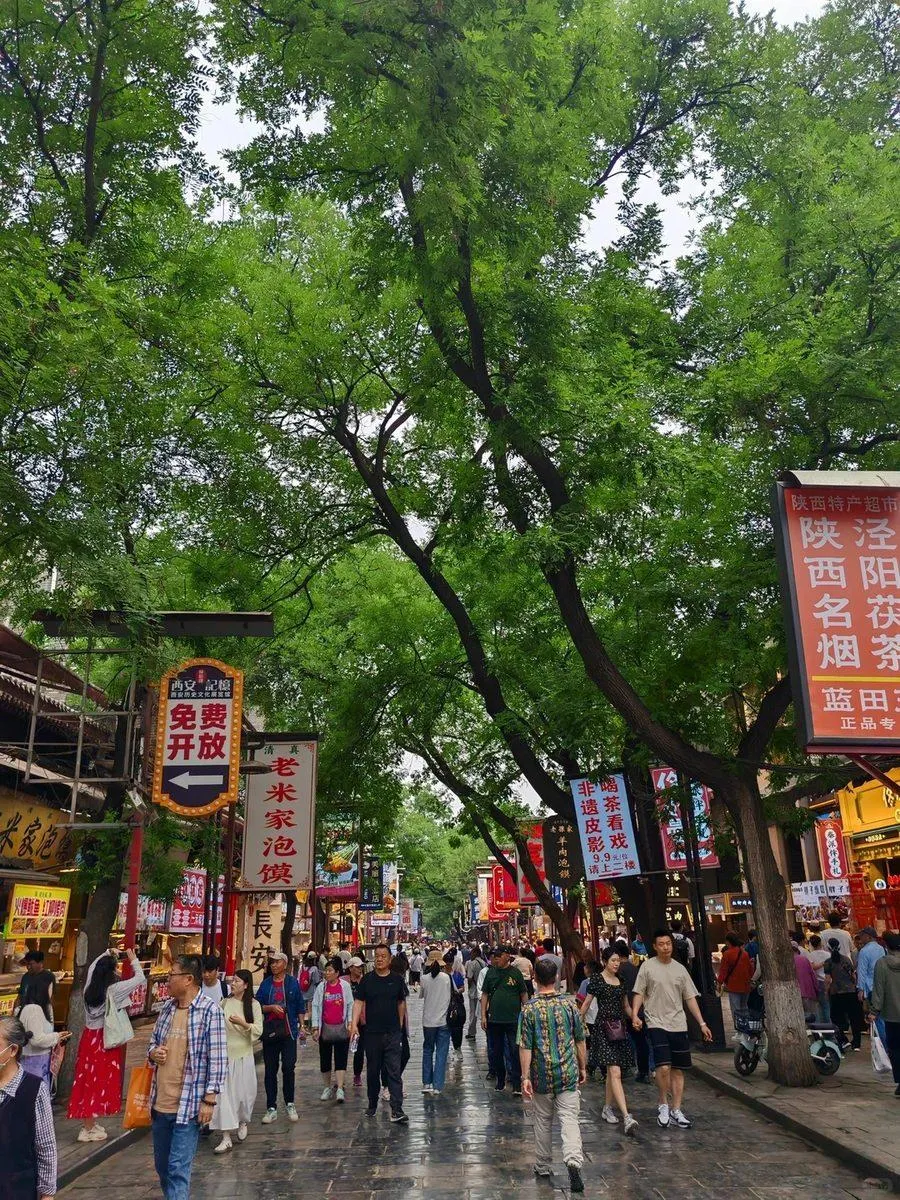
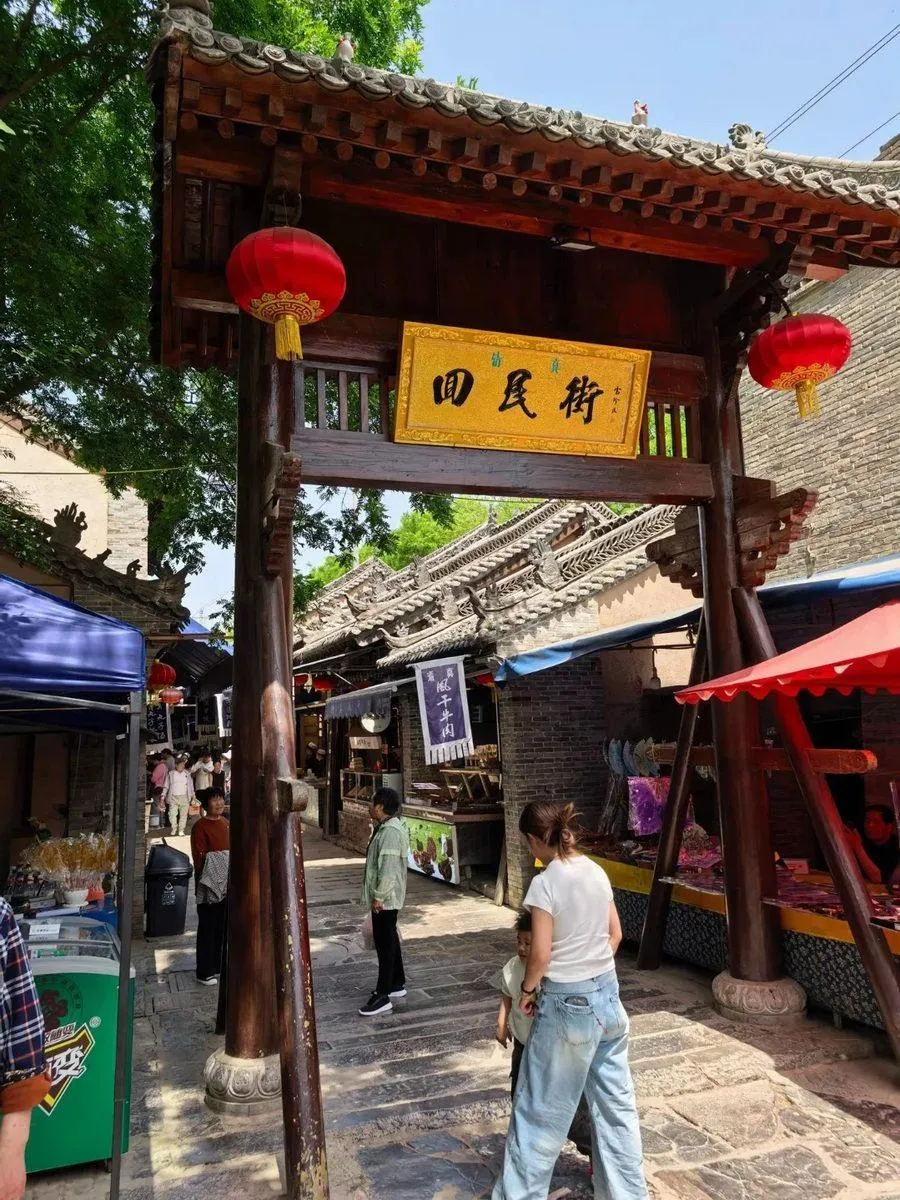
Muslim Quarter: a living neighbourhood, not one street
"Muslim Quarter" is the umbrella name for the Hui Muslim neighbourhood around and beyond the main food street. The attraction is not only the snacks: it is the mix of everyday shops, family restaurants, bakeries, side lanes and religious life. The Great Mosque belongs in this part of the visit. Go in daytime if you want a quieter, cultural pause between food stops; dress modestly, follow the signs and do not photograph worshippers or prayer areas.
- What makes it different: this is the place to slow down, look beyond the neon signs and notice that the quarter continues well beyond the most photographed lane.
- What to order: choose one proper seated meal here or later in Sajinqiao—lamb paomo, beef noodles or grilled skewers—rather than buying five random snacks in a row.
- Respect matters: do not bring pork or alcohol into mosque areas, and avoid treating a religious site as a costume-photo backdrop.
Huimin Street / Beiyuanmen: the famous main street
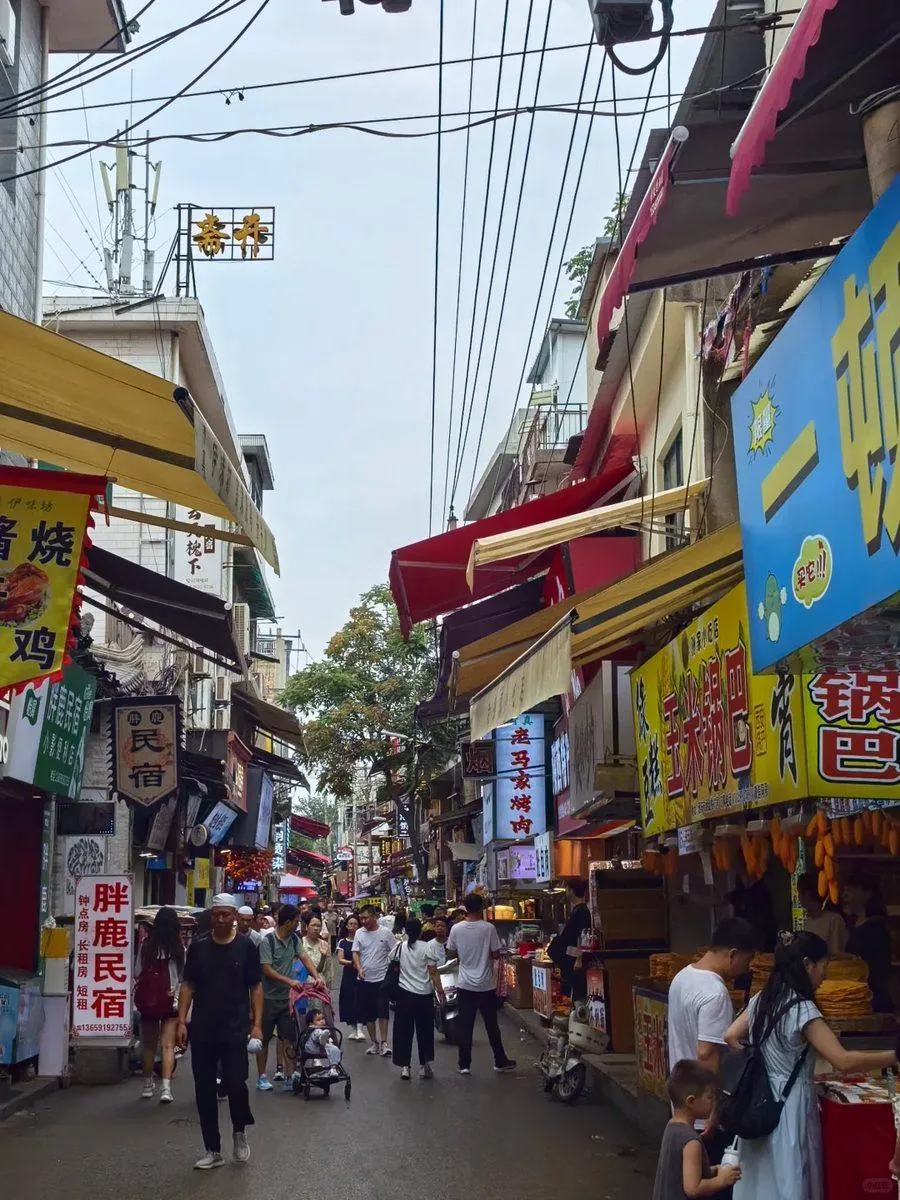
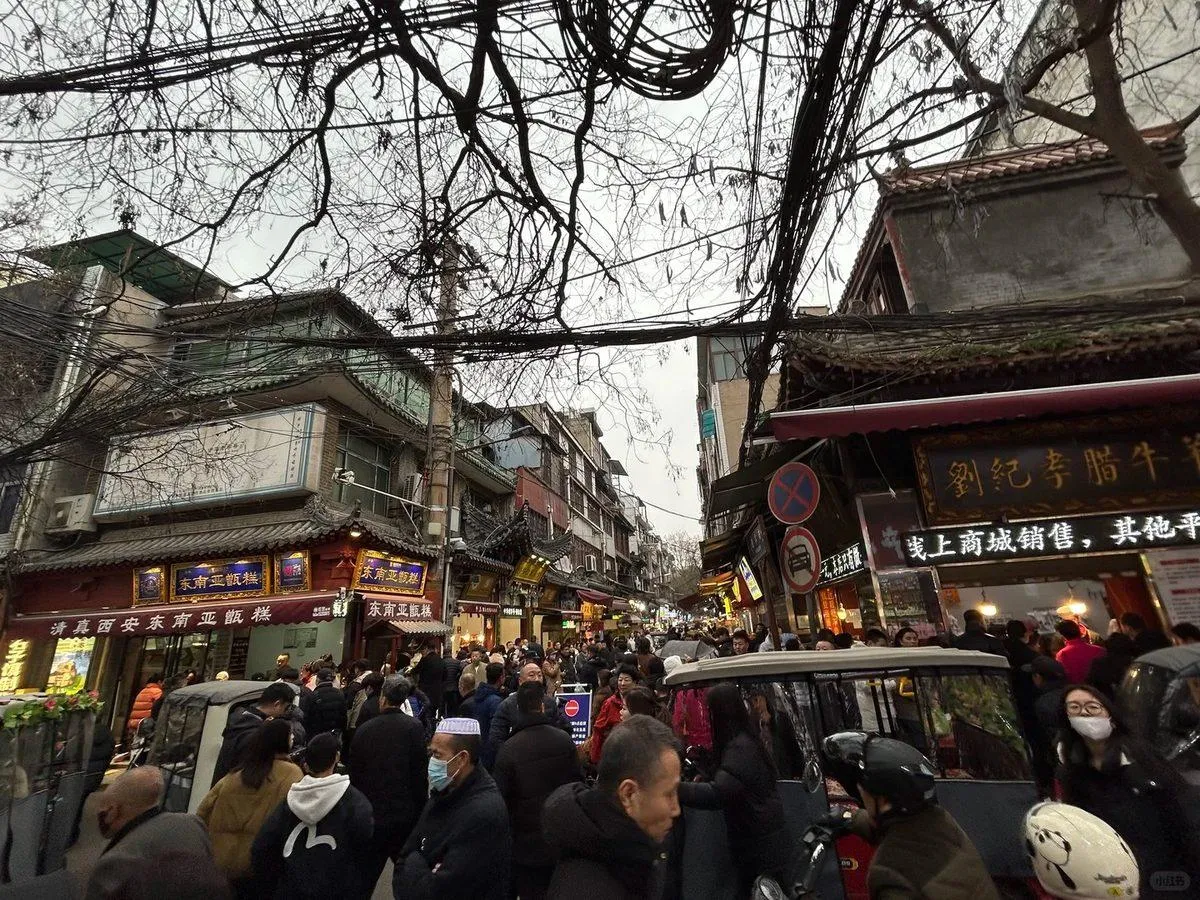
Huimin Street—often mapped as Beiyuanmen—is the part first-time visitors will recognise immediately: food stalls, shop signs, crowds and a fast-moving stream of people. It is absolutely worth walking once, especially for the atmosphere, but it works better as a tasting lane than as your only dinner decision. The rule is simple: keep moving, split small portions, and do not feel obliged to queue for the first viral stall you see.
- Best for: a first taste of roujiamo, persimmon cakes, liangpi and the energy of a packed evening street.
- Timing: arrive before the evening peak if you want photographs; come after dark if you want the full atmosphere and do not mind crowds.
- Reality check: it is the most visitor-oriented part of the route. That does not make it bad—it simply means Sajinqiao is where you should plan the slower meal.
Sajinqiao: end with a local-style meal
Sajinqiao is the part of the route to save for when you are ready to sit down. It is less polished for visitors and English is less common, which is precisely why it is a better finish: you stop wandering and choose one thing to eat properly. Do not chase a "best" shop from an old social post. Choose a busy counter, use your translation app for ingredients, and order a manageable amount before adding more.
- Good final orders: lamb paomo for a full meal; roujiamo and skewers if you want to share; cold noodles when the weather is warm.
- How to order: point, translate, ask for less chilli if needed, and confirm the price before the order goes onto the grill.
- How to leave: save Sajinqiao (洒金桥) in Amap or Baidu Maps before dinner, then let the app take you to your chosen metro station or DiDi pickup point.
What to eat without turning it into a checklist
Three things foreign visitors should prepare
- Payment first: set up Alipay or WeChat Pay before the walk. Many small stalls use personal QR codes, so do not rely on a foreign card being accepted at every counter.
- Translation second: save a short allergy note in Chinese and show it before ordering. The useful phrase is "I do not eat pork (不吃猪肉)" — only use it if true for you; do not assume every stall has an English menu.
- Keep the route simple: arrive around 16:30–17:30 for daylight at the towers and dinner afterwards. Go earlier if you dislike crowds; carry tissues, water and a charged phone.
Respect the neighbourhood
This is a living Hui Muslim neighbourhood, not only a food market. Do not take intrusive photos of worshippers, keep alcohol and pork away from mosque areas, and move aside rather than blocking narrow lanes for photos. If a food stall is crowded, queue calmly and order only when it is your turn.