
Giant Panda Base (熊猫基地)
The Chengdu Research Base of Giant Panda Breeding is the easiest place on Earth to see pandas up close — but timing is everything. Arrive at the 7:30am opening and you'll watch them crunch bamboo and tumble; stroll in at noon and you'll mostly see furry loaves napping. This is the full visitor guide.
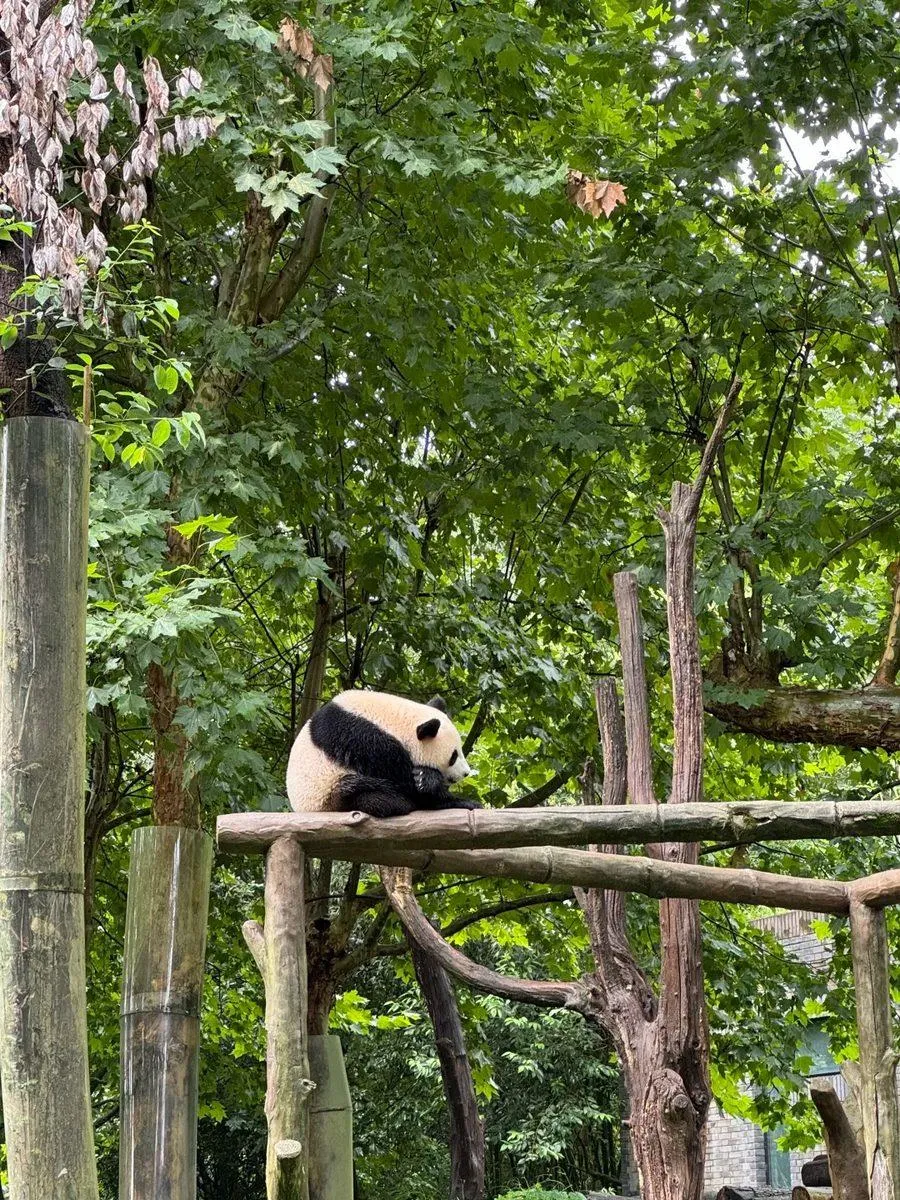
What makes this visit work
Go early for animal behaviour, not a guaranteed celebrity sighting. Pandas are often most active in cooler periods, but individual enclosures, feeding times and named-panda access change with animal care needs.
Book only through the base's current official channel. Ticket availability, entry windows and vehicle arrangements can change. Use the passport details exactly as printed and keep the confirmation available offline.
Choose a simple route. Start with the nursery or the enclosure you care about most, then work outward. The site is large; allow time for slopes, crowds and rest rather than trying to photograph every enclosure.
Before you go
- Book online, real-name. Use the base's official booking notice for the available dates and entry instructions; do not rely on a fixed advance-booking period or old entry window.
- Check animal and vehicle notices: named-panda viewing, nursery access and internal transport can change without making the whole base less worthwhile.
- Wear real shoes. The base is huge and hilly; you'll walk 3–5 hours. Sneakers, not sandals.
- Pack: original passport, power bank (you'll shoot hundreds of photos + need the phone for the shuttle and DiDi), water, a snack, sunscreen, and bug spray — the forest mosquitoes are ruthless even at 8am.
Inside — what to actually do
- Head to the nurseries first. The Moonlight Nursery (月亮产房) shows tiny cubs in incubators; the Sunshine Nursery (太阳产房) has sub-adult pandas climbing and play-fighting.
- See Huahua (花花). China's most famous panda (born 2020, round face, slow mover) lives at the Juvenile Panda Villa. The queue is the park's longest — be at her villa right at 7:30, or wait 30–90 min later. Note: her villa is closed on Mondays (except holidays).
- Don't skip the red pandas. A separate forest enclosure where the small russet animals often stroll right over your head on the wooden bridges — quiet and very photogenic.
- Climb the Panda Tower (熊猫塔). A bamboo-shaped tower with a panorama of the whole park. Free, but it needs a separate reservation and is closed on Tuesdays.
- Ride the shuttle. The internal electric cart is a ¥30 all-day pass (runs until 17:30). Take it to the far end, then walk back through the enclosures so you hit the popular pandas while the crowds are still at the gate.
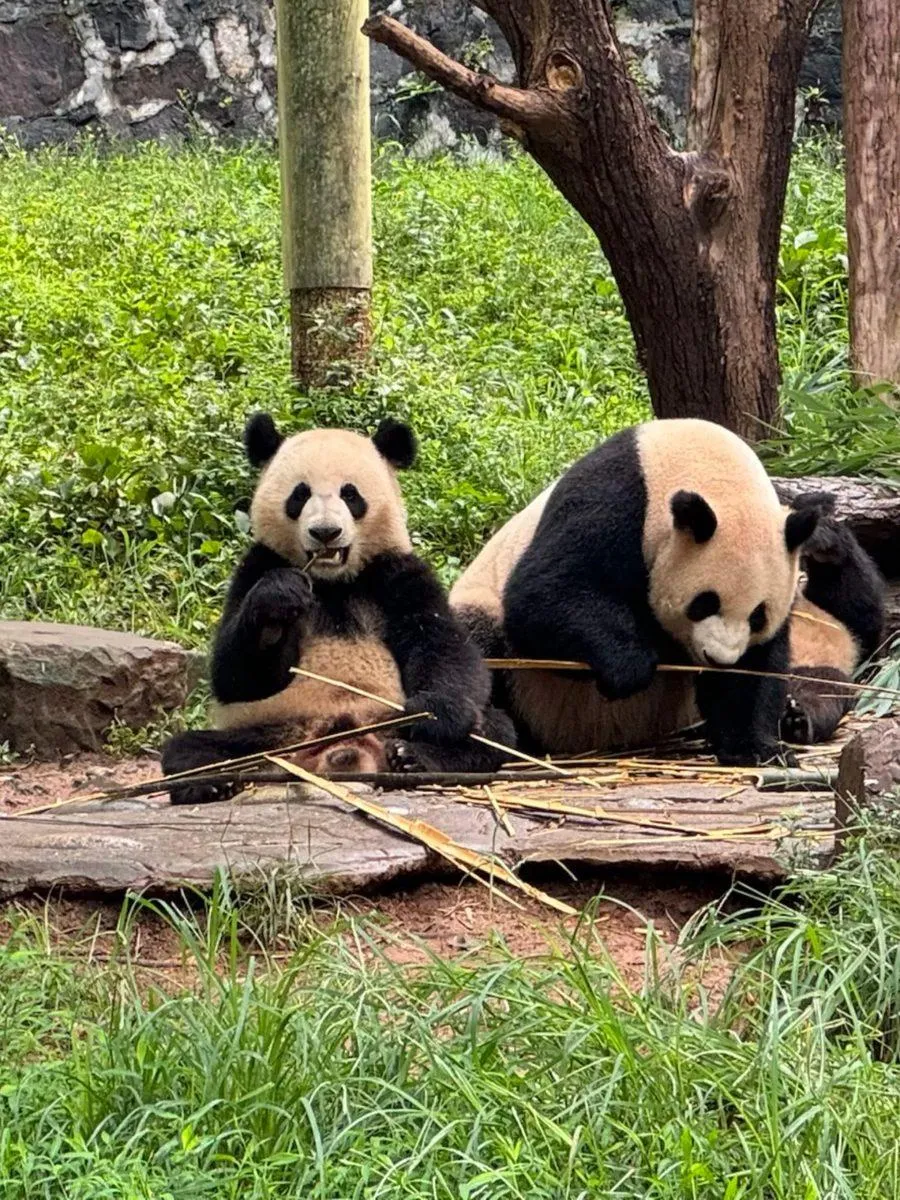
After you leave
- Back in the city for lunch. Chunxi Road (春熙路) or the food streets near Kuanzhai are 35–50 min away — hotpot or a Sichuan noodle bowl hits the spot.
- Pair it with a calm afternoon. The base is a morning animal; the rest of your day belongs to teahouses, People's Park, or the Wide & Narrow Alleys — the slow Chengdu counterpoint to the crowd.
- Want the volunteer experience? That's not here — the keeper-for-a-day programs are at the Dujiangyan Panda Valley (熊猫谷), ~60 km away. Different ticket, different day.
Before you arrive — quick setup
- Install the booking mini-program and link WeChat Pay / Alipay to a Visa or Mastercard before you fly.
- Download a translation app and an offline map (the park signs are bilingual at junctions, but the mini-program is Chinese-first).
- DiDi is your friend at 6:30am — set the destination to "成都大熊猫繁育研究基地 南大门" (South Gate) the night before so you're not typing it in the dark.
How to get there
The base has two gates — pick by your goal:
- South Gate (old, classic — for Huahua & the nurseries): Metro Line 3 (pink) to Panda Avenue (熊猫大道), Exit A, then shuttle bus 408 (¥2) to the gate — about 40–55 min total. Or a DiDi/taxi from downtown ~¥50–80, 35–50 min.
- West Gate (new, quiet — for the Panda Tower & fewer crowds): Metro Line 3 to Military-Civilian Integration Hospital (军区总医院) station, Exit B, then the 409 scenic shuttle ~200 m away. Usually much shorter lines.
- Direct shuttle: a 7:30am city shuttle runs from under the climbing-panda sculpture at Chunxi Road / IFS (¥10) — but book it ahead; generic tour buses leave too late (≈9am) and miss the morning window.
- Leave early. From a central hotel, a DiDi at 6:30am gets you to the gate near 7:15–7:30. The queue starts forming before opening.
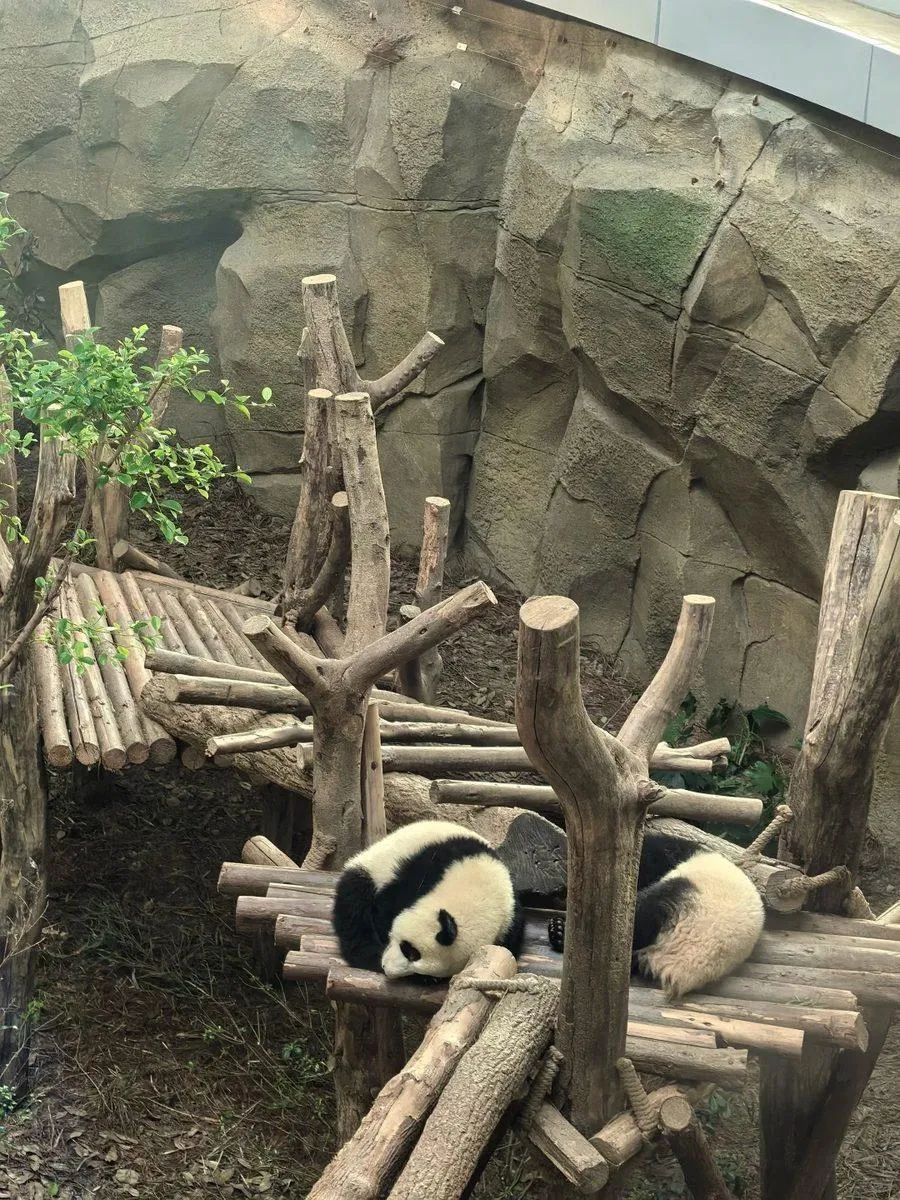
How long to spend
- Minimum: 2.5–3 hours — South Gate straight to the nurseries and one or two villas, then out.
- Recommended: 3–4 hours — both nurseries, the red-panda forest, a villa or two, and the Panda Tower.
- Full day: 4–5 hours doing the West-Gate route plus the old area, or pairing with the Panda Museum.
- Best window: 7:30–10:30am. Pandas eat their main meal then and are active; by late morning they nap, and above 26°C (79°F) they move indoors. There's a brief second wind around 4pm.
Things to watch out for
- No gate tickets. Book online (real-name, passport) days ahead; bring the physical passport to swipe in. Capacity is capped (~60k/day), so morning slots sell out on holidays.
- Gate touts are fake. Anyone offering an "internal skip-the-line channel" is lying — the base has no such thing. Ignore them and use the official flow.
- Huahua rests Mondays. Her villa is closed on Mondays (except holidays); plan around it if she's your goal.
- Panda etiquette: no flash, no feeding, no tapping the glass, keep your voice down. Above 26°C the pandas go indoors — you'll see them through glass, less active.
- Comfort: sneakers (lots of hills), bug spray, a power bank, and your own water/snack — on-site food is fast food and overpriced.
- Shuttle: ¥30 all-day cart pass is worth it if you're tired or with kids; it stops at 17:30. The West Gate is hilly — take the cart between zones.
- Don't be late for your window. Morning-ticket holders before 7:30 and afternoon-ticket holders before 12:00 are turned away and left waiting.
Popular vs. niche
What everyone does:
- The Juvenile Panda Villa to see Huahua — the single longest queue in the park, and the reason most first-timers come.
- The Moonlight & Sunshine Nurseries — the cub and sub-adult enclosures, the classic "aww" shots.
- A South-Gate-in, walk-the-loop route, then out — the tour-group default.
What locals quietly love:
- Enter at the West Gate. The "pro move" — you start at the Panda Tower and Infinite Hills with a fraction of the crowd, then drift into the old area after the tour buses have left.
- The Red Panda forest — most visitors skip it; it's calm, shady, and the animals walk overhead on the bridges.
- The Panda Tower at golden hour — free panorama of the whole bamboo sea, closed Tuesdays, rarely crowded.
- The 4pm second wind — a quieter window when the morning-rush crowd has gone to lunch and the pandas stir again.
- Dujiangyan Panda Valley (熊猫谷) — a separate base 60 km away with cubs in wild-training; far fewer people and a more "wild" feel if you have a full day.
Two routes, one rule. Route A (South Gate): gate → Juvenile Villa (Huahua) → Sunshine Nursery → Moonlight Nursery → Red Pandas → Panda Museum → cart to West → Panda Tower → exit West (~3–3.5h). Route B (West Gate, off-peak): West Gate → Infinite Hills → Star Nursery → Panda Tower → cart to old area → nurseries → Juvenile Villa → exit South (~4–5h). Either way, be at the gate at 7:30 — that's the whole game.
Nearby
Back in the city, Chengdu's teahouses, hotpot, and the Wide & Narrow Alleys are the perfect low-key afternoon. The pace here is the opposite of Beijing or Shanghai — that's the point.