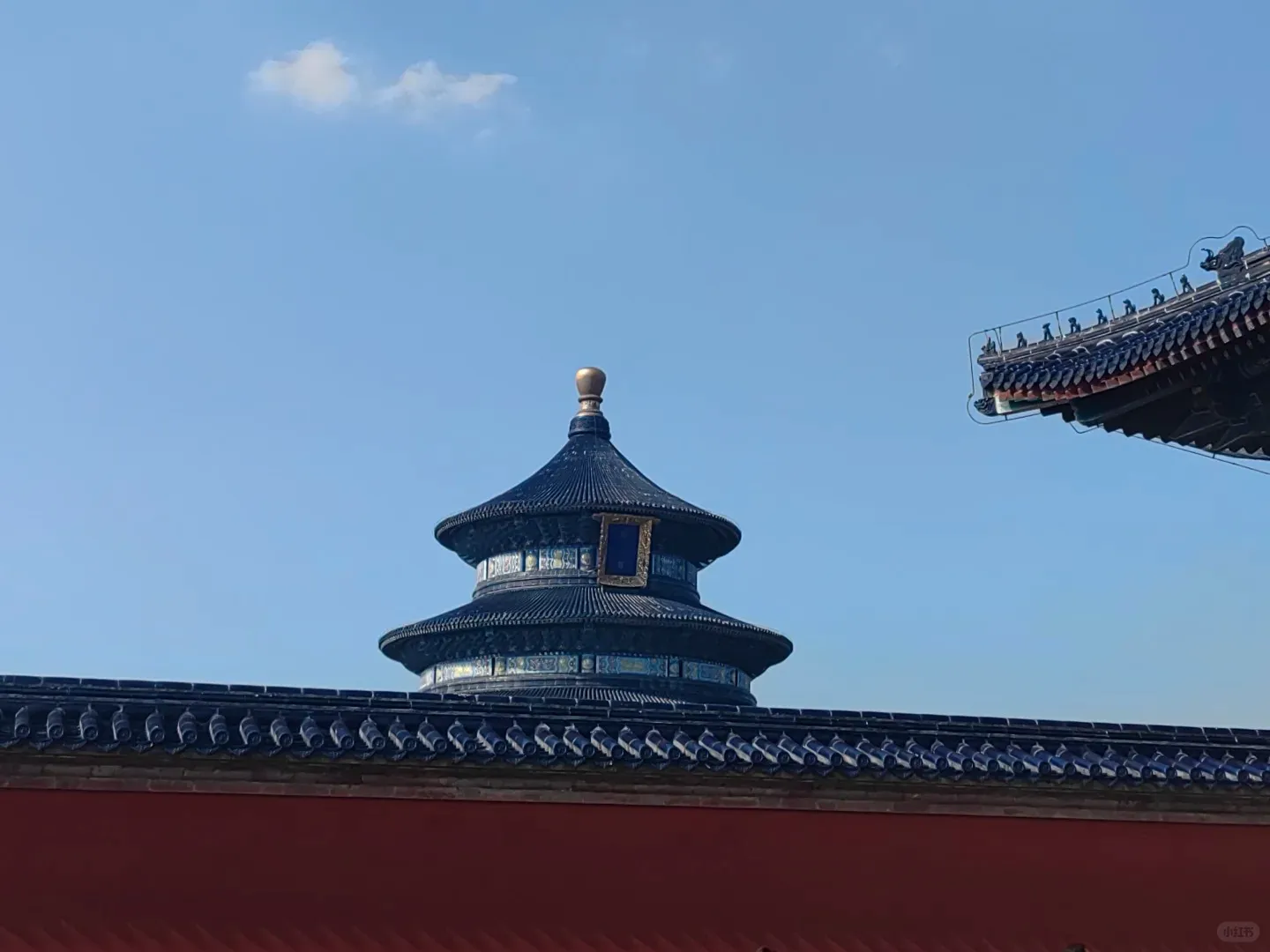
Temple of Heaven (天坛)
A vast walled park in south Beijing where Ming and Qing emperors came to pray for good harvests. The centerpiece — the triple-roofed, blue-tiled Hall of Prayer for Good Harvests (祈年殿) — is one of the most recognized buildings in China. It's a calm, green half-day: ancient cypresses, echoing walls, and far fewer crowds than the Forbidden City, with the bonus of watching Beijingers practice tai chi and sing opera in the mornings.
First-time visitor essentials — the 4 worries, solved
Visa: No extra visa — it's a city park. Bring your passport: although the old mandatory reservation was dropped in 2026, tickets are still real-name and you may be asked for ID.
Money: The combo ticket is ¥34 in peak season (April–October), ¥28 off-season; the park-only gate ticket is ¥15/¥10. Alipay/WeChat Pay at the gate and inside; ¥50 cash covers a snack and the famous ¥29 prayer-tower ice pop.
Internet: Buy online on the "天坛" official WeChat account or the "畅游公园" mini-program to skip the queue; keep an eSIM on for maps. Either way, do it before you're standing at the gate in peak season.
Hotels: Stay anywhere central and take the metro — Line 5 puts you at the East Gate in minutes. It pairs naturally with Qianmen or the Forbidden City on a different day; don't try to cram them into one.
Before you go
- Tickets: Buy the combo (联票) — it covers the three core sights (祈年殿 / 回音壁 / 圜丘) and is cheaper than buying them separately. Park-only tickets can't enter those buildings.
- Opening hours: Park grounds 06:00–22:00 (last entry 21:00). The three core buildings open 08:00–18:00, last entry 17:30 — don't roll up at 17:00 expecting to see inside.
- Monday gotcha: The core buildings close on Mondays in normal season — except the summer window (mid-July to end of August), when they stay open. In peak summer you're safe any day; off-season, avoid Monday.
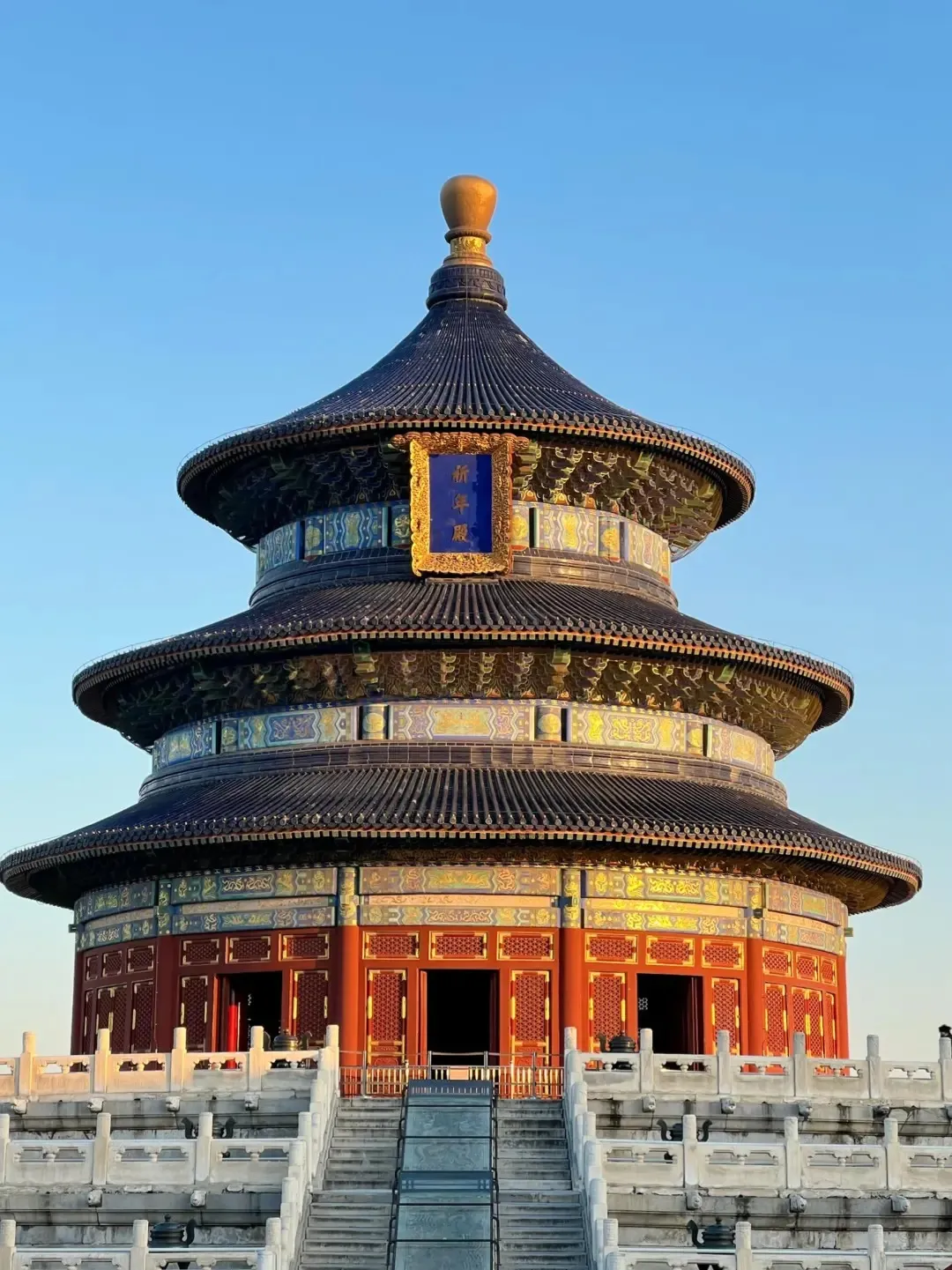
- Best time to enter: Right at 08:00 for empty photos of the Hall of Prayer, or 16:00–17:30 for soft, warm light on the blue tiles. Midday is flat and busy.
- Time needed: 2–3 hours for the main axis; 3–4 if you add the quieter west and north corners.
How to get there
- Metro (best): Line 5 to 天坛东门 (Tiantan Dongmen / East Gate), Exit A — you're at the gate in under a minute. This is the easiest entry and the one locals use.
- West Gate: Line 8 to 天桥 (Tianqiao), Exit C — good if you want to walk the axis south-to-north (圜丘 first, then up to the Hall of Prayer).
- North Gate: Line 14 to 景泰 (Jingtai) is a longer walk; most visitors prefer East or West.
- By car: Not worth it — parking is scarce and pricey right around the park. Metro is faster and drops you at the door.
How long to spend
- Bare minimum: 90 minutes if you only hit the Hall of Prayer and walk the central axis.
- Recommended: 2–3 hours to add the Echo Wall, the Circular Mound and a slow loop through the cypress groves.
- Leisurely: 3–4 hours folding in the Hall of Abstinence and the west-side pavilions, plus a tea break.
Popular must-sees
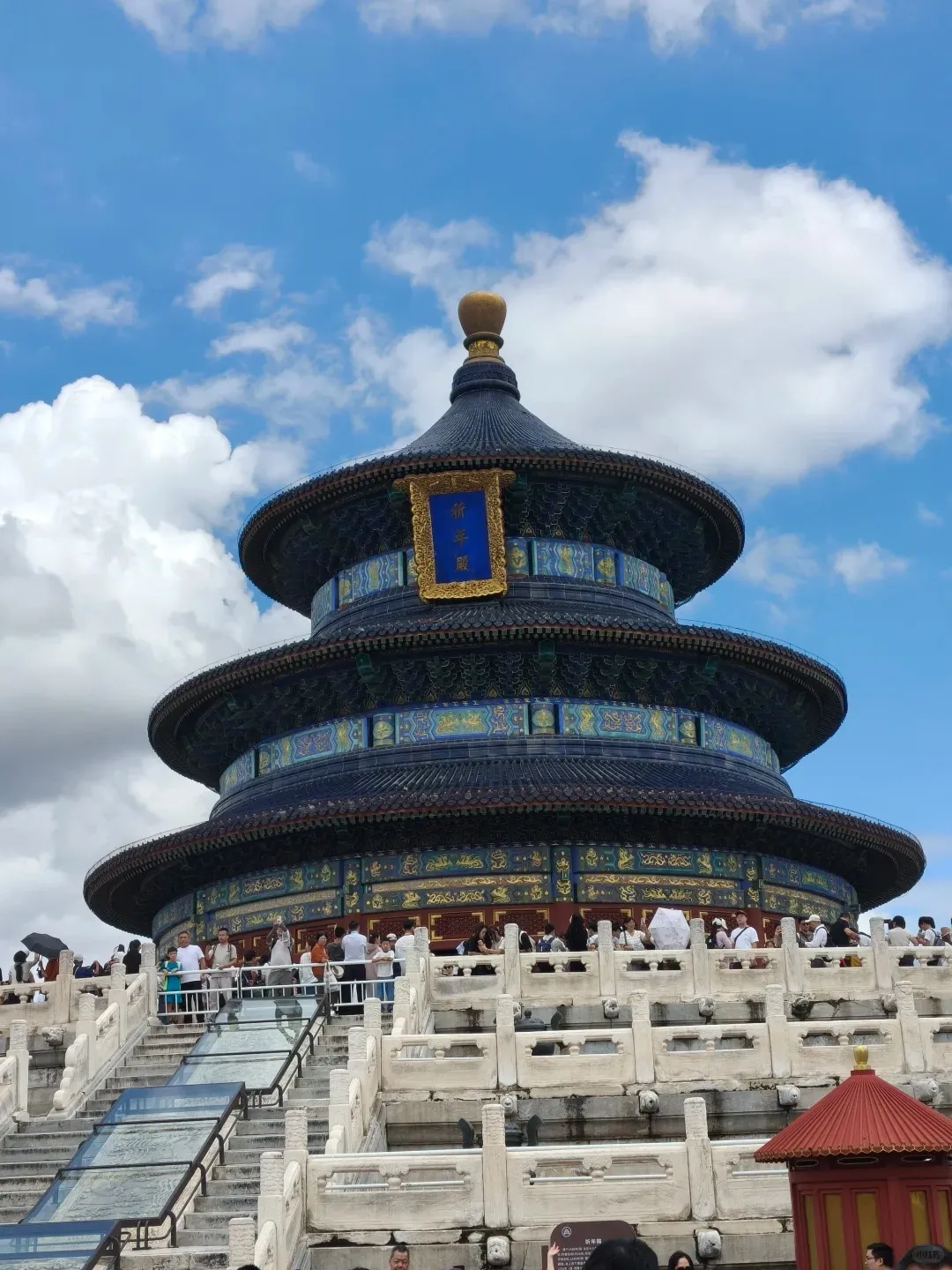
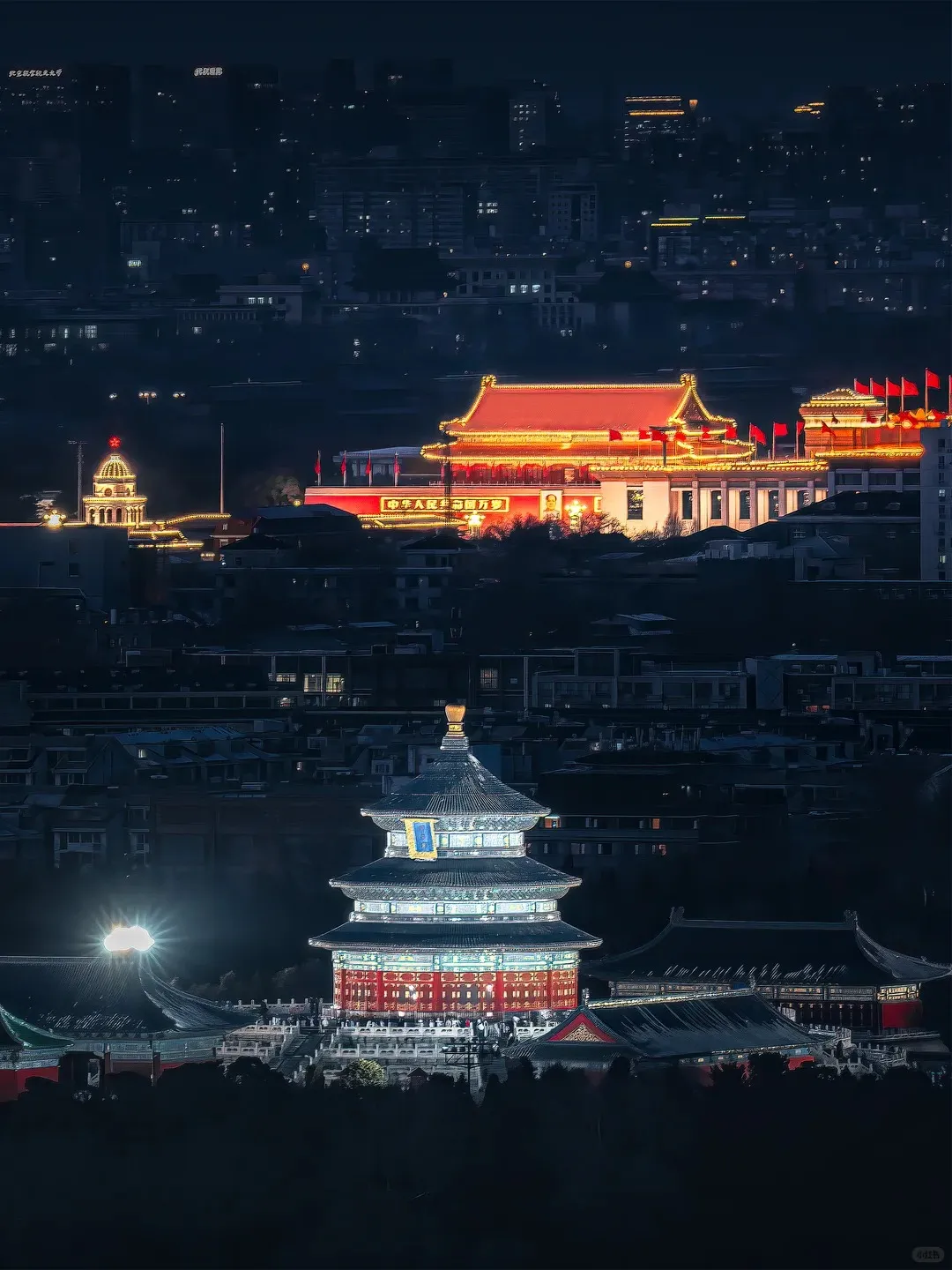
- Hall of Prayer for Good Harvests (祈年殿): The icon — a 38 m wooden cone with three tiers of blue tile and no nails. Stand south of the building on the long approach for the classic, people-free wide shot.
- Echo Wall & Imperial Vault (回音壁 / 皇穹宇): The circular wall that once carried a whisper end-to-end. It's now roped off so you can't press your ear to it, but the Three Echo Stones (三音石) just outside still let you clap and hear the bounce.
- Circular Mound Altar (圜丘): A white marble terrace where the emperor prayed at the winter solstice. Stand on the Center of Heaven stone (天心石) in the middle and speak — your voice comes back louder. Fun and free to try.
- The central axis walk (丹陛桥): A long raised causeway linking the Hall of Prayer to the Circular Mound — the "path of the emperor" and the easiest way to string the sights together.
- Seven Star Stones (七星石): A row of carved stones near the east side, said to represent the Big Dipper — an easy photo stop between buildings.
Hidden gems and local favorites
- Hall of Abstinence (斋宫): The emperor's pre-ceremony retreat in the west of the park — red walls, a moat and almost nobody there. The most photogenic "secret" corner.
- Double-Ring Pavilion (双环万寿亭): A rare twin-ring pavilion in the north-west, built for a Qing birthday. Quiet and a little surreal.
- Morning life: Before 09:00 the groves fill with locals — tai chi, opera singing, hacky-sack clubs, and the famous "water calligraphy" brushing characters on the pavement. It's a free show you won't get at the palace.
- Ancient cypress forest: Some trees are 600+ years old. The shaded loops west of the axis are where Beijingers actually walk; follow them and you escape the tour groups.
- Summer flower sea (生境花园): In late July–August the north-east outer area blooms with a wildflower meadow — a colorful, crowd-free add-on.
- The prayer-tower ice pop: ¥29, shaped like the Hall of Prayer, sold near the north buildings. Touristy but a fun photo.
Things to watch out for
- Buy the combo, not separate tickets. Three separate building tickets cost more than the ¥34 combo — a common first-timer overpay.
- Don't arrive late: Core buildings stop admitting at 17:30 (18:00 close). One visitor who turned up at 15:00 found everything shut and only walked the outer park.
- Monday closures off-season: Outside the summer window the three buildings are shut Mondays — plan around it.
- Bring your passport: Real-name ticketing; the gate may ask for ID even though the old reservation rule is gone.
- Gate touts: Ignore "internal guide / shortcut" offers at the entrance — they're commission traps. Follow the park signs; the route is obvious.
- Shade is limited: The central axis is exposed. In summer bring a hat, sunscreen and water; the groves are your friend.
- No drones / lighters: Security at the gates confiscates them — same as other Beijing sights.
- Comfy shoes: You'll walk 5,000+ steps across the park; this is not a heels kind of day.
After you leave
- Food — Nanmen Shuan Rou (南门涮肉): The famous old-Beijing copper-pot hotpot right by the South Gate; ~¥80 per person, a local ritual.
- An acquired taste: 尹三豆汁 near the North Gate sells douzhi, a fermented mung-bean drink Beijingers love and visitors often hate — try a tiny bowl if you're brave.
- To Qianmen: A 2 km taxi (or a walk via the south) links you to Qianmen Street and the central axis — easy to combine on a different day.
- Help line: Park service through the "畅游公园" platform for ticketing questions.
Before you arrive — quick setup
- Ticket: buy the combo online on "天坛" official WeChat or "畅游公园" 1 day ahead in peak season.
- Maps: save "天坛东门" (East Gate) and "天桥" (West Gate) in Chinese for offline use.
- Shoes & shade: sneakers, hat, water; arrive at 08:00 or after 16:00 for the best light.