Photo via Xiaohongshu
Terracotta Army (兵马俑)
Eight thousand life-size clay soldiers, horses and chariots buried to guard China's first emperor. Two thousand two hundred years later, the Terracotta Army is still the single best reason to fly to Xi'an — and the one sight that makes every guidebook understatement feel accurate.
First-time visitor essentials — the 4 worries, solved
Visa: If you qualify for China's 30-day visa-free entry (expanded list in 2025–2026), you only need a passport valid for 6+ months. US/UK/Canadian and many other passport holders can also use the 240-hour transit visa-free scheme if you continue to a third country. Either way, bring your original passport to the ticket gate — screenshots won't work.
Money: Tickets must be bought online through Trip.com or the official WeChat mini-program for Emperor Qinshihuang's Mausoleum Site Museum (秦始皇帝陵博物院), and payment is easiest with Alipay or WeChat Pay linked to a foreign Visa/Mastercard. Carry ¥200–500 in cash as a backup; international cards are rarely accepted at the site.
Internet: Download an eSIM (Airalo/Holafly/Nomad) before you land, or buy a Chinese SIM at the airport with your passport. The official ticket mini-program and maps need data; museum Wi-Fi usually requires a Chinese phone number for SMS verification.
Hotels: Most foreign visitors stay inside the city wall near Bell Tower or at Xi'an North Railway Station. Book through Trip.com or Booking.com and confirm the property accepts foreign guests — a few budget hotels still cannot register passports.
Getting there — how to reach the Terracotta Army
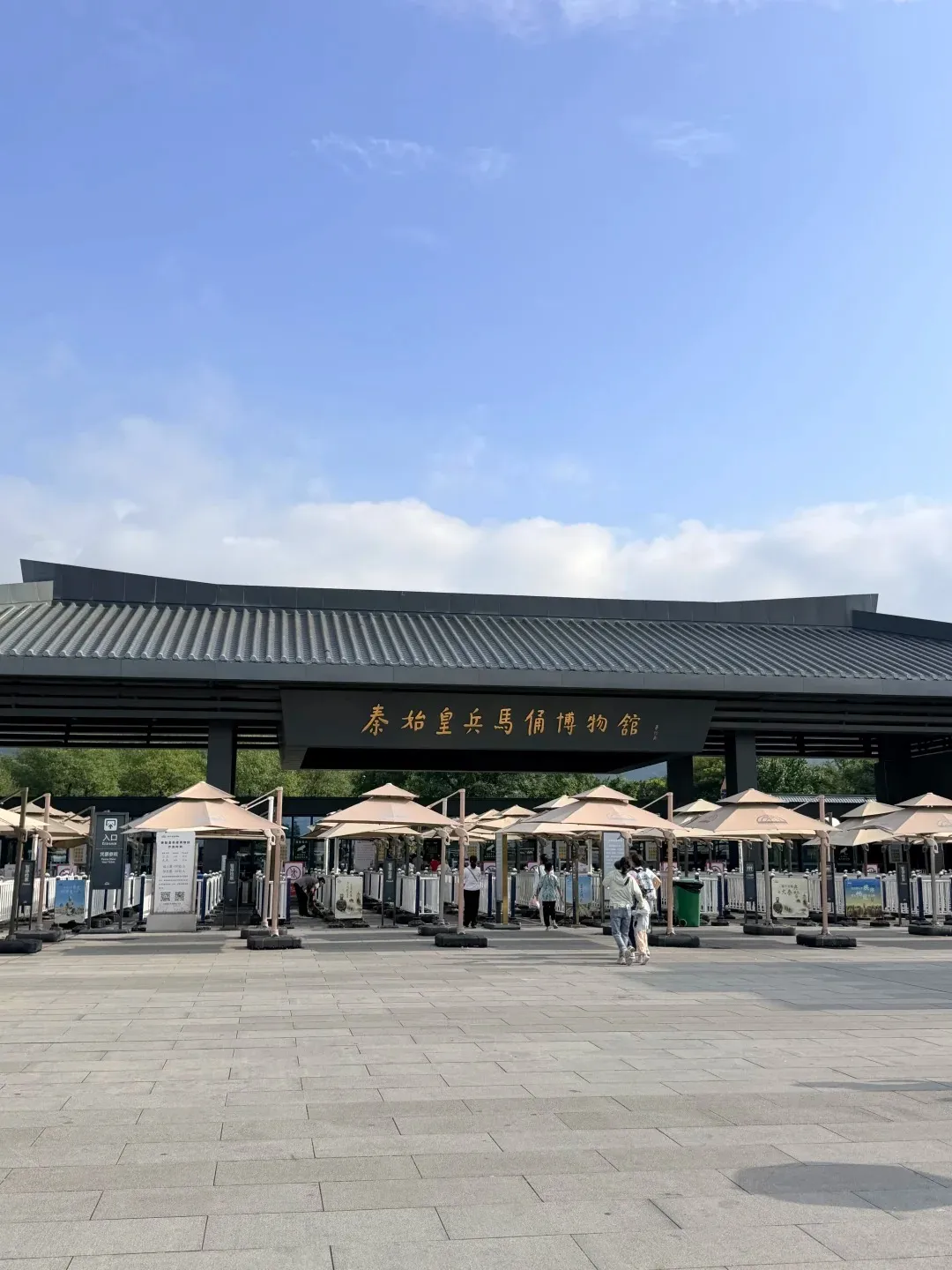
The site is in Lintong District, about 40 km (25 miles) east of central Xi'an. There is no ticket window on site — book online first, then travel. Three realistic ways:
Metro + bus (cheapest, ~¥15, 75–90 min)
- Take Metro Line 9 to Huaqingchi Station (华清池站), Exit C. Then hop on Lintong bus 602 or 613 (~¥5–8) straight to the museum — about 30–40 min.
- Pro tip: stay on Line 9 one more stop to Qinling West Station (秦陵西站), Exit D, then a ¥6 taxi (~10 min) drops you at the North Gate — closer to the pits than the South Gate that the Huaqingchi bus uses.
Tourist Bus 306 / You 5 (游5, budget from the center)
- Departs from the east square of Xi'an Railway Station, ~¥7 one way, ~75 min. Look for the official green buses in the marked bays.
- Scam alert: anyone in a "uniform" pulling you onto a minibus claiming the public bus is "broken" is a fake — they reroute you to jade factories and a fake "World Eight Wonders Museum." Only board the official green buses.
DiDi / taxi (easiest, ~¥120–150 one way, ~60 min)
- Book inside Alipay (DiDi mini-program). From the Bell Tower area it's ¥120–150. Ask the driver for the second parking lot (第二停车场) — closer to Pit 1. Some drivers drop you at the first lot, adding a 15-min walk or a ¥5 shuttle.
- From Xianyang Airport (T3/T5) there's a direct airport bus to the site, ~¥45, ~90 min.
How long to spend
- Minimum: 2.5–3 hours if you only see Pit 1, Pit 2, Pit 3 and the Bronze Chariot Hall.
- Recommended: 3–4 hours — add a guide/audio tour so the clay soldiers actually mean something.
- If you want it all: 4–5 hours including Lishan Garden (the Emperor's Mausoleum Site Park) and its bronze-chariot museum, reached by the free shuttle bus from the main site.
- Timing to dodge crowds: arrive at the 8:30 opening for 20–30 min of quiet, or enter after 15:30 (last entry ~1 hr before close) when the tour buses have gone. Avoid the 10:00–14:00 crush.
Before you go
- Book 1–7 days ahead. Daily capacity is capped (~65,000) and sells out 3–5 days early in peak season (Apr–Oct). Use Trip.com (English, takes foreign cards, books up to 30 days out) or the official WeChat account for Emperor Qinshihuang's Mausoleum Site Museum (秦始皇帝陵博物院).
- Opening hours: roughly 8:30–17:00 (peak) / 8:30–16:30 (winter); last entry about an hour before close.
- Ticket price: about ¥120 adult (¥100 off-season). Students (with ID) ¥60, under-16s and 65+ free (reservation still required). Covers Pit 1/2/3, Lishan Garden and the shuttle bus.
- Bring your passport. Entry is passport-linked and real-name; foreigners can't use the ID-card channel, and photocopies are usually rejected at the checkpoints.
Inside the site
Most people start at the Museum of Terracotta Warriors and Horses (the three pits + Bronze Chariot Hall), then take the free shuttle to Lishan Garden / the Mausoleum Site Park. The "reverse route" the guides recommend: do Lishan Garden first (almost empty), then hit the pits around 12:30 when the first tour wave is at lunch.
Pit 1, Pit 2 and Pit 3
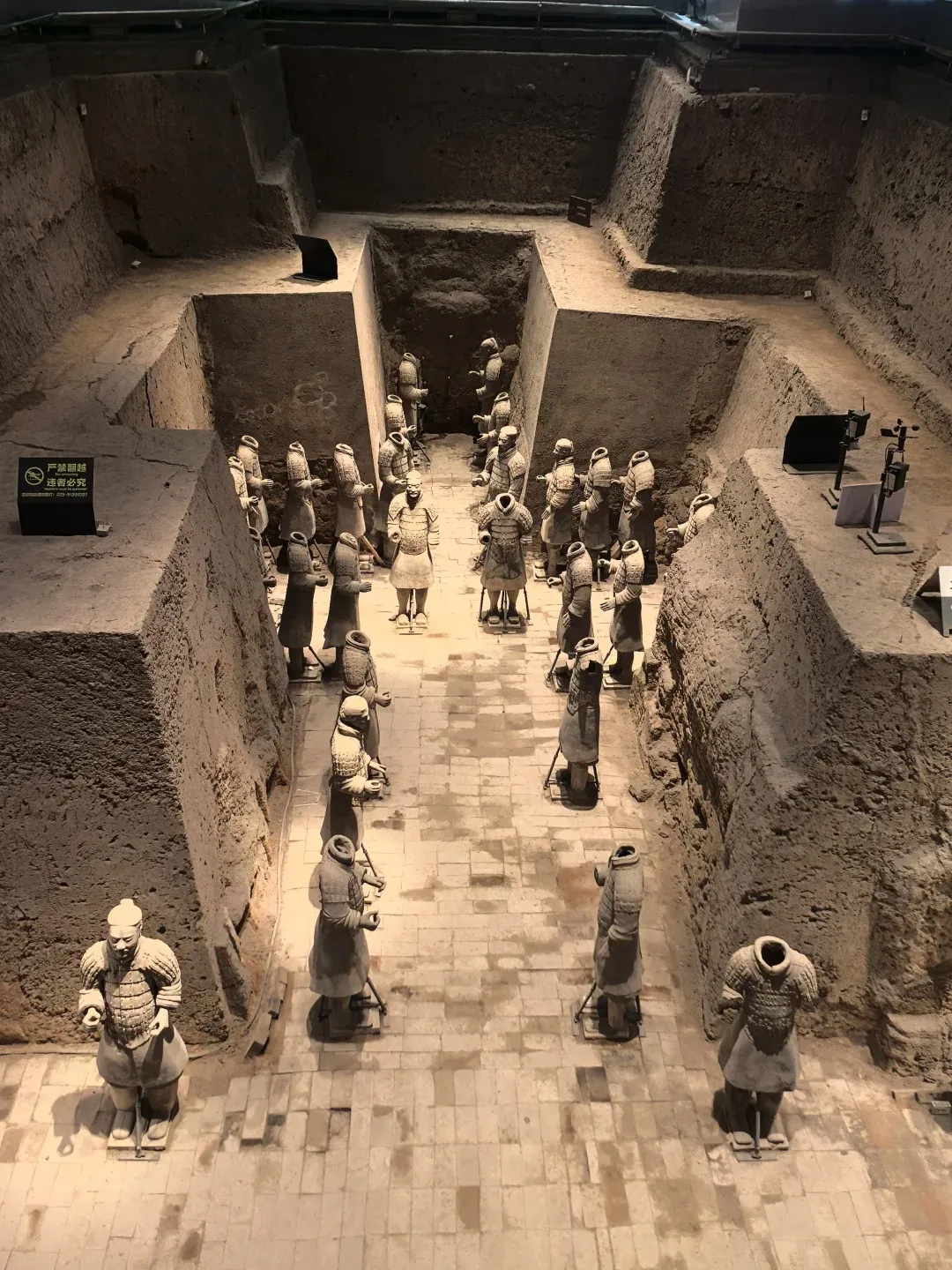
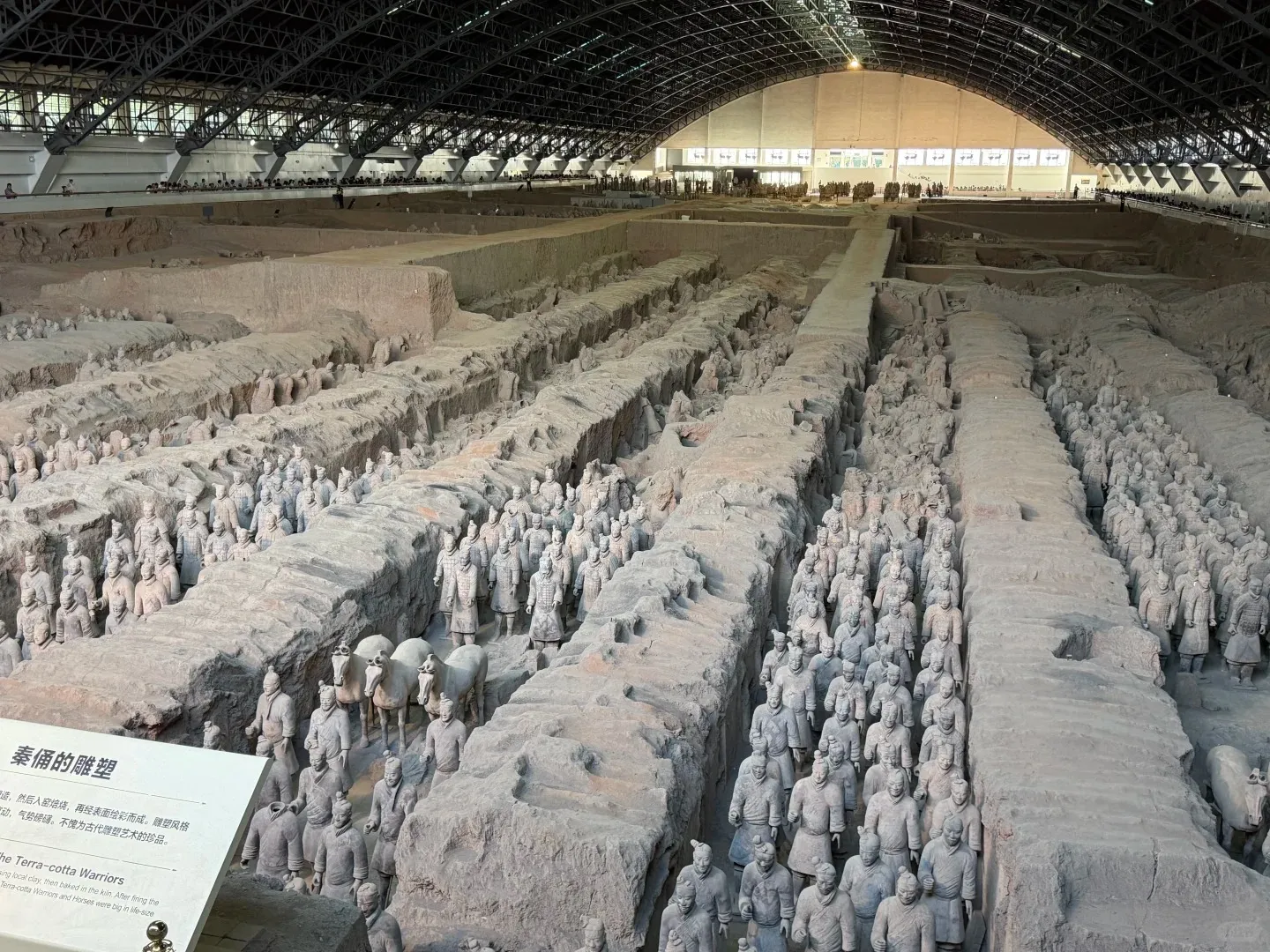
- Pit 1 is the famous hangar: 6,000+ infantry and chariots in formation. Largest and most crowded — go first (or last, after 15:30). Walk to the rear sections: behind glass you can often watch archaeologists still at work, which most tourists miss.
- Pit 2 shows mixed troops — cavalry, archers, generals — in glass cases up close. Look for the kneeling archer and the general with detailed armor.
- Pit 3 is the smallest, thought to be the command post. Quick but prestigious — a calm breather after Pit 1.
Bronze Chariot Museum
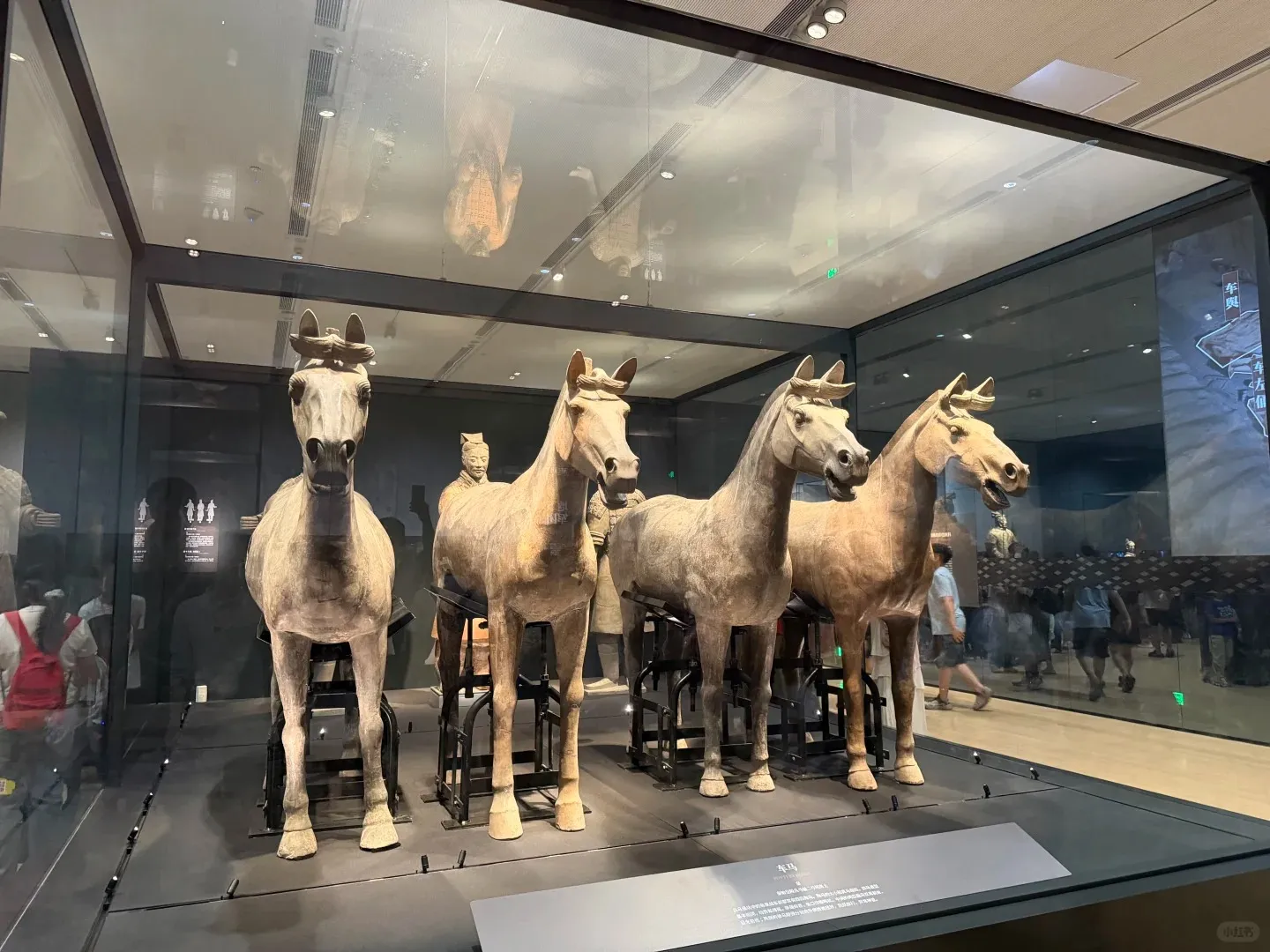
After the pits, the exhibition hall houses two half-life-size bronze chariots and horses found near the tomb — over 3,500 parts each, with gold and silver fittings. Often called the "ancient Rolls-Royce." Air-conditioned and far less packed than the pits; give it 20–30 minutes and read the placards (the umbrella mechanism alone is a marvel).
Practical notes
| Topic | What to know |
|---|---|
| Language | English signage is decent but brief. Hire an official guide (¥90–300 small group, inside the 2nd checkpoint near Pit 1) or rent the ¥30 audio guide for context. |
| Maps | Baidu Maps and Amap work best; Google Maps is blocked without VPN. Search for "Emperor Qinshihuang's Mausoleum Site Museum (秦始皇帝陵博物院)". |
| Payment | Cafés and gift shops inside take Alipay/WeChat Pay. Some small stalls outside are cash-only. |
| Toilets | Available but often squat-style; the ones near the Bronze Chariot Hall are cleaner. Carry your own paper and sanitizer. |
| Drones | Strictly prohibited anywhere in the mausoleum area. |
| Crowds | By 10:30 the tour buses arrive. Morning opening is the only quiet window. |
| Etiquette | No flash photography. Do not cross barriers for photos — pits are fragile archaeological sites, not selfie backdrops. |
After you leave
- Taxi / DiDi touts: Ignore drivers shouting "taxi" at the exit. Use the DiDi app or walk to the official taxi stand.
- Fake guides and souvenir stalls: The exit funnels you through a ~1.5 km commercial street. Small warrior replicas are fine; "jade" and "authentic antiques" are usually fake. The KFC and noodle shops here are overpriced — eat in the town of Lintong or back in Xi'an.
- Food: The Muslim Quarter or a noodle shop near your hotel beats the site restaurant. In Lintong town, try biangbiang noodles or the local stone pomegranate chicken (石榴土鸡).
- Problems? Call 12345 (Xi'an hotline) or the visitor center. Keep your ticket QR code (screenshot it — cell service is patchy at the gate).
Things to watch out for
- No same-day tickets. This is the #1 mistake. Book online in advance with your passport — there is no on-site window.
- Fake "museums." Only Emperor Qinshihuang's Mausoleum Site Museum (秦始皇帝陵博物院) is real. Any "World Eight Wonders Museum" or "Qin Mausoleum VR" detour off the official bus is a scam.
- Guides outside the gate are fake. The only legitimate guides are inside the 2nd security checkpoint. Anyone in a blue jacket approaching you outside is not official and will rush you through or steer you to a jade shop.
- Wear real shoes. You'll walk 15,000–20,000 steps on hard surfaces. The path from the gate to Pit 1 alone is ~15 min. No heels.
- Summer is brutal. Pits 1 and 2 have little shade and get oppressively hot. Carry water, a hat and sunscreen; the free shuttle bus between zones helps.
- Shuttle bus cutoff. The free shuttle to Lishan Garden stops running around 16:10 — if you see the pits first you may be too late for the bronze chariots there. Do Lishan Garden while you still have time.
- Bring a power bank. Photo-heavy day; the gate scanners eat battery.
Most visitors love this
- Pit 1 — the main army. The iconic image everyone came for: thousands of warriors in battle formation. Stand at the front railing for the postcard shot, then walk the full length to the working archaeologists at the back.
- Pit 2 — the kneeling archer. The single most famous individual statue, behind glass with visible hairline detail. The mixed-troop layout shows cavalry and generals up close.
- The Bronze Chariot Hall. Two half-life-size gold-and-silver chariots — the finest bronze work of the Qin dynasty and a cool, quiet break from the crowds.
- Lishan Garden's bronze-chariot museum. Most skip it, but the two full-scale replicas here (3,500+ parts each) are arguably the real highlight of the whole ticket.
- The scale itself. Photos don't prepare you for the size of Pit 1. Just standing there is the bucket-list moment.
Off the beaten path
Everyone piles into Pit 1; the better experiences are the ones the bus tours skip.
- Lishan Garden / the Mausoleum Site Park. The actual burial mound of Qin Shi Huang, plus the K9901 acrobat pit and K0006 civil-official pit. Quieter, greener, and home to the best bronze chariots. Do it first and you'll have it to yourself.
- The rear of Pit 1. Tour groups cluster at the entrance. Walk to the back and you'll often find archaeologists excavating behind glass — a live archaeology lesson the front-of-house crowd misses.
- Pit 3 at a slow pace. Tiny and easy to blow past, but it's the command center — high-ranking officers, and a calm, uncrowded corner to actually look at faces.
- The 15:30+ arrival. Reverse the tour-bus rhythm: show up after the lunch crush and you skip 80–90% of the people. Pair it with Huaqing Palace (same Metro Line 9) for the late afternoon.
- Free audio guide from Bilibili. Download a good English walkthrough before you go; it covers all three pits and Lishan Garden and costs nothing.
Pair it with
Huaqing Palace is on the same Metro Line 9 and makes an easy same-day afternoon: hot springs, Tang-dynasty gardens, and the Song of Everlasting Sorrow night show. Many visitors stay a night in Lintong to beat the bus wave and soak in a hot-spring hotel after.