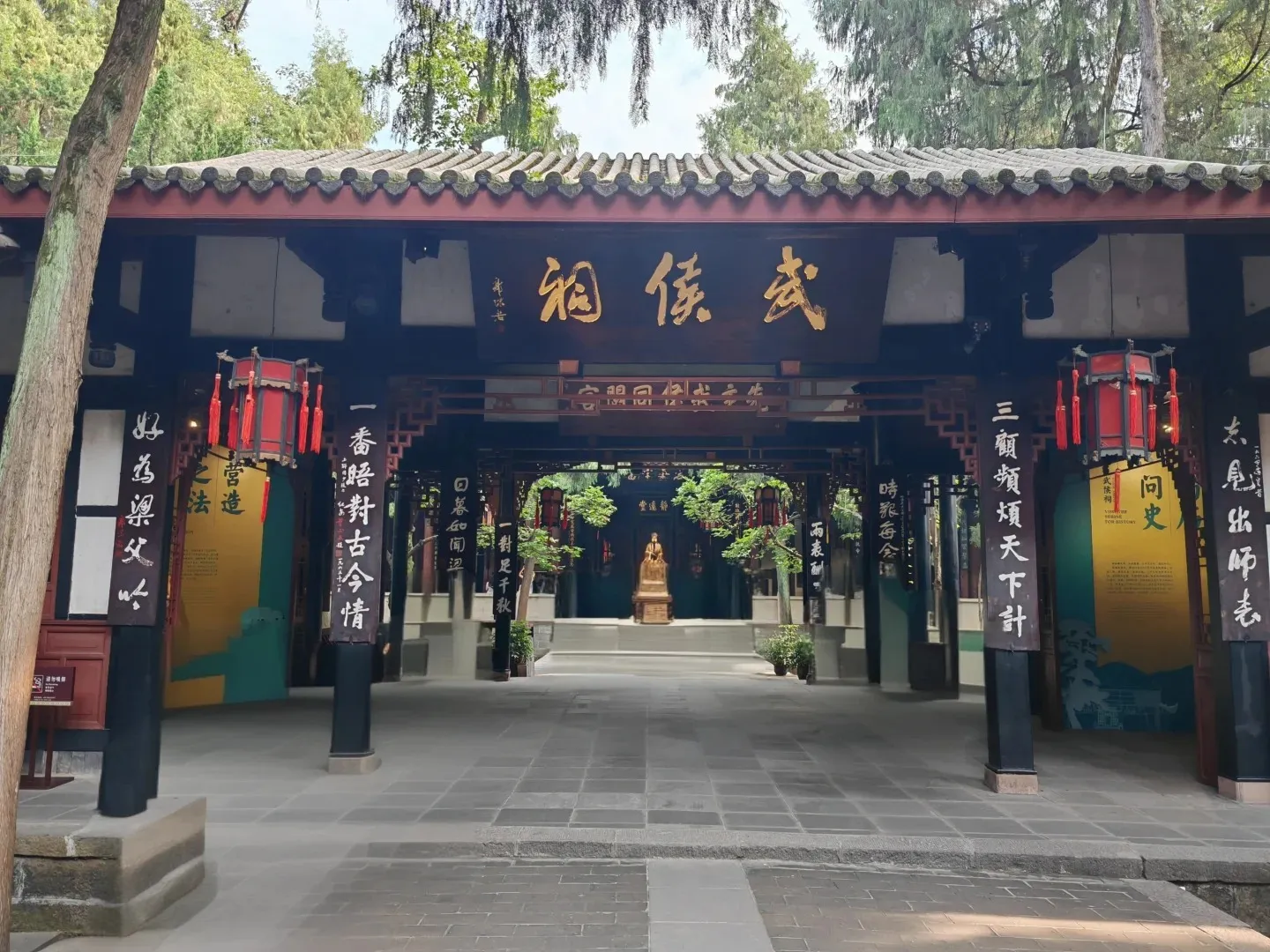
Wuhou Shrine (武侯祠)
The most famous Three Kingdoms site in China — a cypress-shaded complex honouring Zhuge Liang, the sage strategist of the Shu-Han kingdom, and Liu Bei, its first emperor. It's the only shrine in the country where an emperor and his minister share the same incense, and the red-wall bamboo corridor out the back is the most-photographed spot in Chengdu. It sits right next to Jinli Ancient Street, so you do both in one visit.
First-time visitor essentials — the 4 worries, solved
Visa: Standard China entry. Bring your physical passport — the ticket is real-name and you swipe it to enter.
Money: Ticket is ¥50 (adult) / ¥25 (student) — book online, not at the gate. Inside, the "Zhuge" milk tea and souvenirs are overpriced; save your spending for Jinli food next door.
Internet: Book via the WeChat mini-program "成都武侯祠博物馆" (Chinese) or Trip.com. An eSIM + translator helps; the official site has a free 10-minute audio guide.
Hotels: Wuhou Shrine is in west-central Chengdu, a short metro ride from anywhere. Stay central and metro/bus in, or base here for the museum cluster (Sichuan Museum, Du Fu's Cottage are nearby).
Before you go
- Location: 231 Wuhou Temple Street (武侯祠大街), west Chengdu, beside Jinli. Metro Line 3/5 to Gaoshengqiao (高升桥), Exit D, then an 8-min walk — or Line 10 to Wuhou Shrine Station (武侯祠站), Exit B, almost at the door. Bus 1/57/82/334 also stop here.
- Opening hours: relic area (文物区) 8:30–18:00 (last entry 17:00); the west garden (西区园林) stays open to 22:00. Open daily, including Mondays.
- Ticket: ¥50 (adult), ¥25 (student), free for under-6 / over-70. Book the official WeChat mini-program 1–14 days ahead, passport-linked; swipe your ID at the gate.
- Best time: arrive before 10:00 or after 15:00 to dodge the 10:00–14:00 crush. The red-wall corridor is magic at 9am or 4pm side-light.
- Time needed: 1–1.5 hours for the shrine, plus Jinli after.
Inside — what to actually see
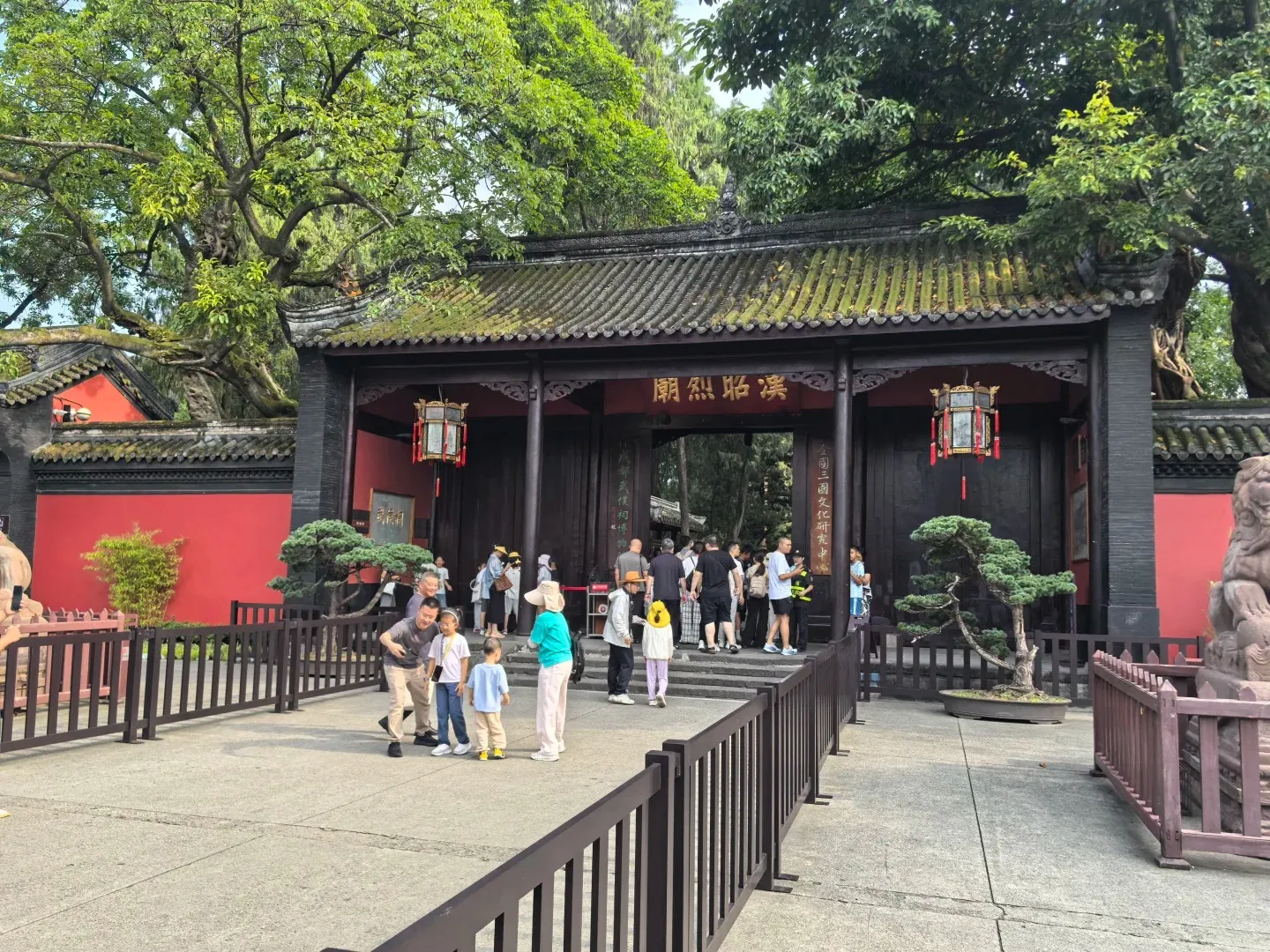
- Liu Bei Hall (汉昭烈庙): the emperor centre-stage, Guan Yu and Zhang Fei flanking him — the "Oath of the Peach Garden" tableau.
- Tang Stele / "Three Perfections" (三绝碑): a Tang-dynasty stone praised for its text, calligraphy and carving — the shrine's quiet masterpiece.
- Civil & Military Galleries (文臣武将廊): 28 statues of Shu-Han heroes — Zhao Yun, Pang Tong and the rest lined up like a point roster.
- Zhuge Liang Hall (武侯祠): the namesake — a seated statue of the strategist, the famous "attack-the-heart" couplet (攻心联), and the Kangxi plaque "名垂宇宙" (Fame Fills the Universe).
- Liu Bei's Tomb (惠陵): a peaceful wooded mound behind the halls — the only intact Three Kingdoms imperial tomb in China.
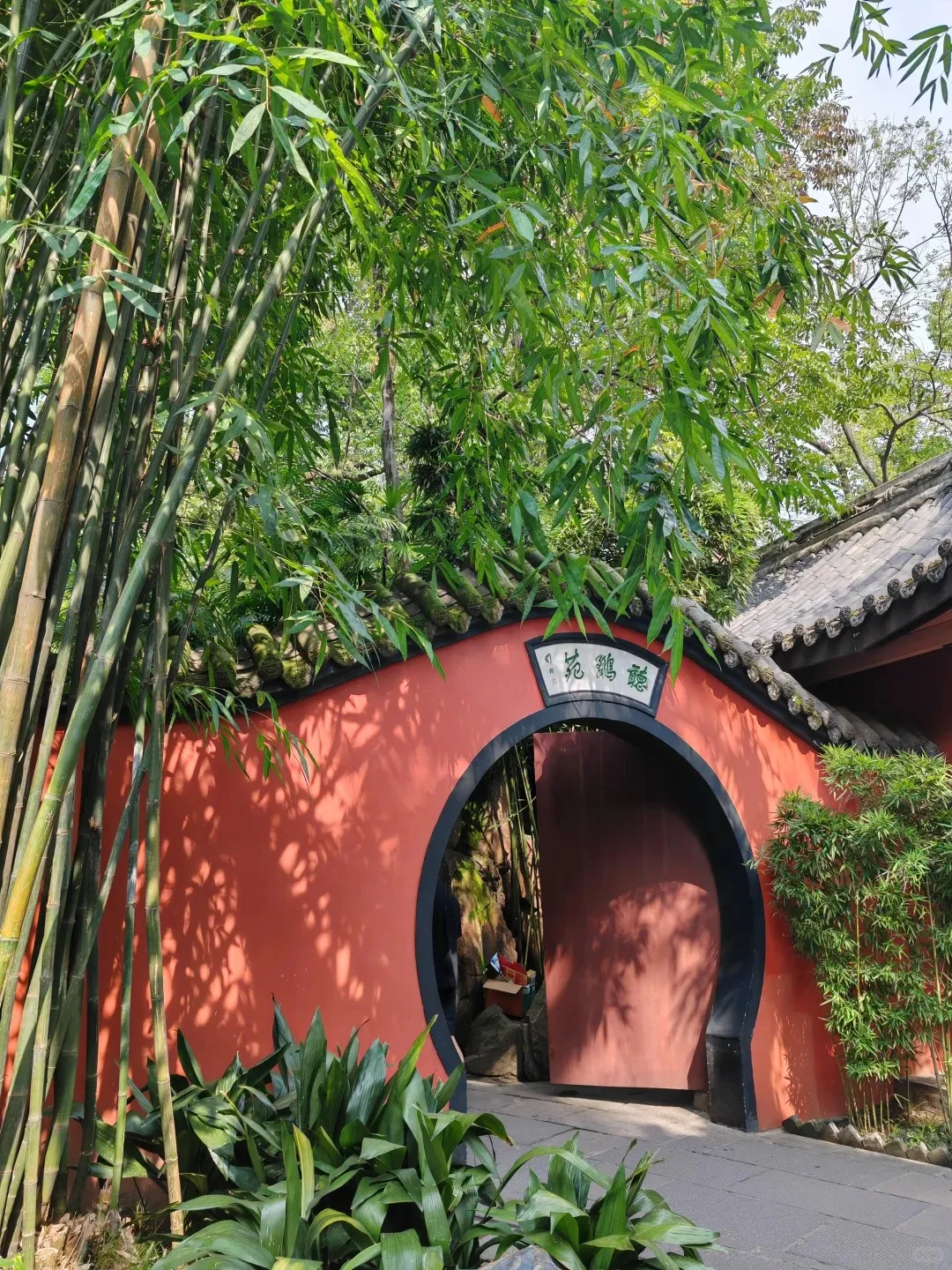
- Red Wall & bamboo corridor (红墙夹道): the vermilion wall and green bamboo lane — Zhang Yimou filmed here, and it's the most-photographed spot in the city. Free to view from outside.
After you leave
- Jinli Ancient Street: the back gate opens straight into Jinli — lanterns, snacks, tea houses. Free.
- West garden (西区): included in your ticket, open to 22:00 — lakes and woods where locals stroll after dinner, far calmer than the relic halls.
- Sichuan Museum & Du Fu's Cottage: both a short ride west if you want more culture the same day.
- Complaints: 12345 tourist hotline.
Before you arrive — quick setup
- Book ahead on the official mini-program; save Wuhou Shrine (武侯祠) in your map app for the taxi driver.
- A little Three Kingdoms context (the novel, not just history) makes the statues meaningful — or grab the free 10-minute audio guide at the gate.
- Pair it with Jinli — one ticket, one afternoon: shrine first, then food in Jinli's lanterns.
How to get there
- Metro (easiest): Line 3/5 to Gaoshengqiao (高升桥) Exit D, then an 8-minute walk; or Line 10 to Wuhou Shrine Station (武侯祠站) Exit B (nearly at the gate).
- Bus: 1 / 57 / 82 / 334 stop at the shrine; the city sightseeing shuttle also stops here.
- DiDi / taxi: set the destination to "成都武侯祠博物馆 (Wuhou Shrine Museum)" — from central Chengdu about 20–30 min. Ignore the "black cabs" loitering at the exit.
- On foot: if you're already at Jinli, the shrine's back gate is a 2-minute walk away.
How long to spend
- Minimum: 1 hour — Liu Bei Hall, Zhuge Liang Hall, the Red Wall corridor, out.
- Recommended: 1.5–2 hours — add the galleries, the Tang Stele, Liu Bei's tomb, and a slow walk of the Red Wall.
- With Jinli: 3–4 hours doing both — shrine in the calm morning, Jinli for lanterns and snacks at dusk.
- Best window: before 10:00 (cool, quiet halls) or after 15:00; the Red Wall corridor is best at 9am or 4pm for side-light.
Things to watch out for
- Book online, real-name. No paper tickets at the window; swipe your physical passport/ID at the gate. Kids under 6 and seniors 70+ are free but still must reserve.
- Gate touts are fake. Anyone selling "blessed" items, "skip-the-line" passes, or unlicensed guiding is not official — the shrine says it never authorises online ticket resellers. Ignore them.
- It's a working memorial. Keep your voice down near the statues; no flash photography.
- Overpriced inside. The "Zhuge" milk tea and shrine souvenirs cost more than the same thing in Jinli or a convenience store — buy there instead.
- Crowd timing. 10:00–14:00 is jam-packed, especially at the Red Wall corridor. Go early or late.
- What to wear: light / white clothes make the red-wall photos pop; comfortable shoes — there's more walking than it looks.
Popular vs. niche
What everyone does:
- The main axis — Liu Bei Hall → Zhuge Liang Hall → the "attack-the-heart" couplet.
- The Red Wall corridor for the classic photo (it's the reason most people come).
- A quick walk-through of the Civil & Military Galleries.
What locals quietly love:
- Liu Bei's Tomb (惠陵) — a shaded, near-empty mound behind the halls; the only intact Three Kingdoms imperial tomb in China, and almost no one stops.
- The West Garden (西区) — included in your ticket, open to 22:00, lakes and woods where Chengdu locals stroll after dinner. Tour groups never go.
- The Tang Stele (三绝碑) — step right, read the Tang-dynasty text; most visitors walk past it.
- Night tour on Friday/Saturday at 19:00 — lanterns lit, the red wall at its most atmospheric, a fraction of the daytime crowd.
- Sichuan Museum (四川博物院) next door, and Nanjiao Park (南郊公园) — both free, both quiet, both an easy add-on the same afternoon.
One loop, no backtracking: Gate → Liu Bei Hall → Tang Stele → Civil & Military Galleries → Zhuge Liang Hall → Three Oaths Temple (三义庙) → Liu Bei's Tomb → Red Wall corridor (photo stop) → out the back gate into Jinli. Do it before 10am and you'll have the red wall to yourself.
Nearby
Right next door, Jinli Ancient Street is the natural follow-on — free to enter, best at lantern time, and where the real Chengdu snacks are. The pace shifts from solemn history to easy evening fun in a two-minute walk.